 Skip to content


Generating b2b saas webinar leads has become much harder over the last few years.
Attendance rates fluctuate. Buyers are overwhelmed with invitations. Sales teams are becoming more skeptical of webinar-sourced leads. Many SaaS marketers are now questioning whether webinars still produce meaningful results.
The answer is yes, but only when webinar strategy evolves beyond registrations.
The strongest webinar programs today are not focused on vanity metrics. They focus on attracting qualified buyers, creating relevant conversations, and identifying intent signals throughout the engagement journey.
That shift matters because webinar success is no longer measured by signups alone. It is measured by what happens after the webinar ends.
According to ON24’s 2025 Digital Engagement Benchmarks Report, engagement outcomes increasingly depend on audience targeting and content relevance, not just promotional reach.
The teams generating stronger b2b saas webinar leads are building webinar programs around buyer intent, ICP alignment, and long-term demand generation strategy.
Why do b2b saas webinar leads often underperform?
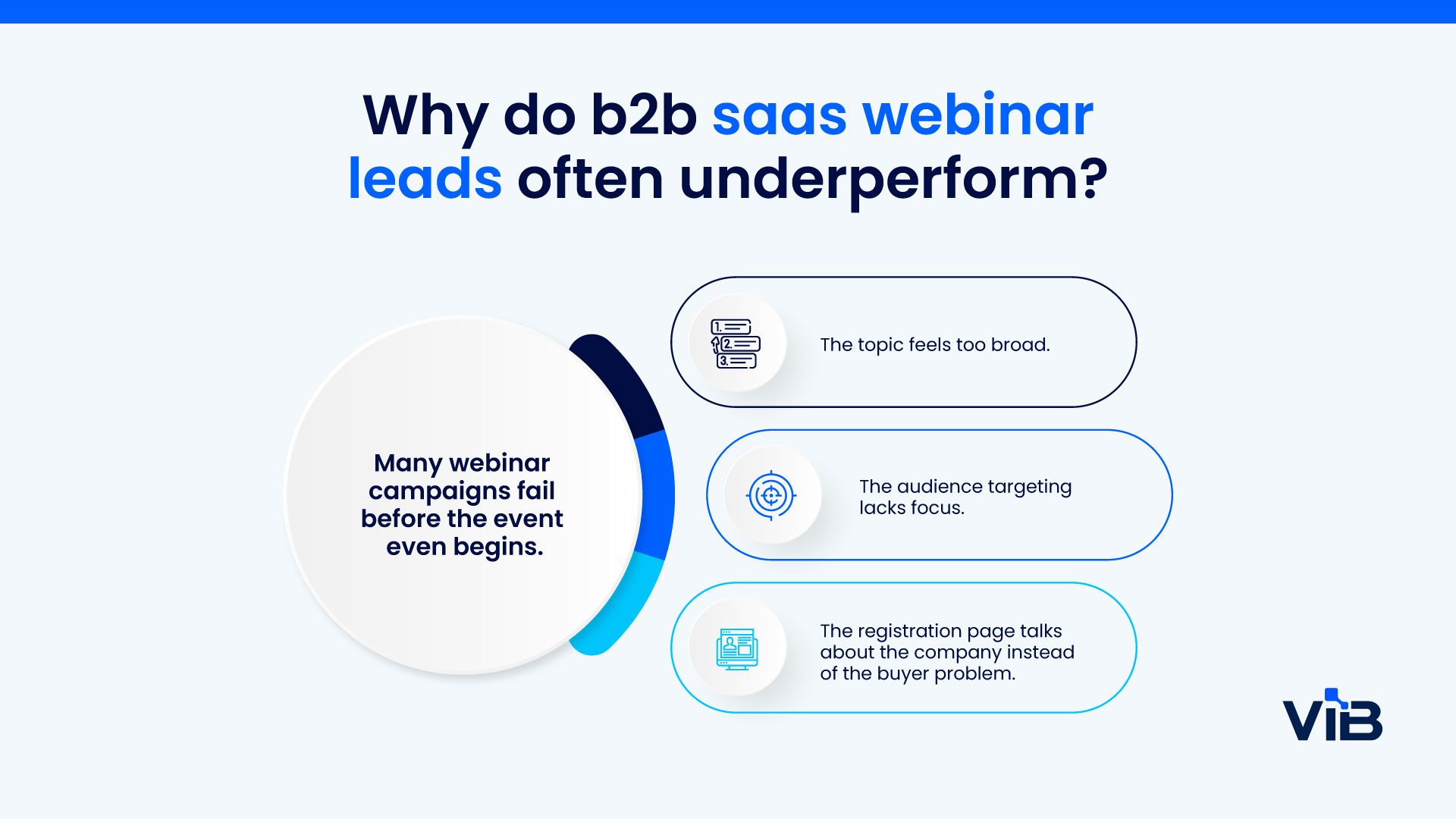
Many webinar campaigns fail before the event even begins.
The topic feels too broad. The audience targeting lacks focus. The registration page talks about the company instead of the buyer problem.
Then marketers end up with hundreds of registrations and very little downstream impact.
This is one of the biggest frustrations in SaaS marketing today.
Marketing teams invest weeks building presentations and coordinating speakers, only to discover that most attendees were never realistic buyers.
Are marketers prioritizing volume over fit?
There is a major difference between attracting attendees and attracting potential customers.
Many webinar campaigns optimize for registrations because registrations are easy to measure. But registrations alone rarely indicate buying intent.
A webinar with 500 signups can still generate almost no qualified conversations.
Meanwhile, a smaller webinar with highly targeted attendees may influence multiple opportunities because the audience closely matched the ideal customer profile.
That is why stronger webinar programs prioritize relevance first.
Does the webinar topic solve an immediate business problem?
The highest-performing webinar topics usually connect directly to operational challenges.
Buyers are far more likely to attend sessions tied to real business outcomes than broad industry commentary.
Topics that often perform well include:
Improving operational efficiency
SaaS buyers are constantly under pressure to improve workflows and reduce friction. Webinars focused on practical improvements naturally attract stronger engagement.
Addressing emerging security or compliance risks
Urgency matters. Topics tied to changing regulations or evolving threats often create stronger attendance quality.
Driving measurable outcomes
Buyers respond to webinars tied to practical goals like increasing retention, improving onboarding, or reducing acquisition costs.
Specificity consistently outperforms vague thought leadership.
How should SaaS marketers improve webinar targeting?
Audience quality has become one of the biggest drivers of webinar success.
Even excellent webinar content struggles when promotion depends on exhausted databases or overly broad audiences.
The best webinar programs combine multiple targeting approaches instead of relying on one email send.
Why does ICP alignment matter?
Strong webinar campaigns start with a clear understanding of who the webinar is actually for.
That includes industry fit, job title relevance, company size, and buying stage.
Without that alignment, webinar promotion becomes inefficient very quickly.
A webinar designed for cybersecurity leaders should not be promoted the same way as a webinar for RevOps teams or SaaS founders.
Messaging, urgency, and positioning all change depending on the audience.
Why are intent signals becoming more valuable?
Intent data helps marketers identify buyers already researching relevant problems.
That matters in SaaS, where buying cycles are often long and involve multiple stakeholders.
Intent signals can include repeat content engagement, ad interaction, webinar attendance, or topic-specific research activity.
When webinar engagement combines with intent data, marketing and sales teams can prioritize outreach more effectively.
What separates high-converting webinars from average ones? 📈
The strongest webinar programs rarely feel overly promotional.
Instead, they focus on helping buyers solve real problems.
That changes how marketers approach titles, speakers, and overall webinar structure.
Are webinar titles outcome-driven?
Titles heavily influence registration quality.
Generic titles often attract passive attendees. Specific titles attract buyers actively looking for answers.
Compare these examples:
Weak:
“The future of AI in SaaS”
Stronger:
“How SaaS teams reduce onboarding friction with AI-driven workflows”
The second title communicates a clear outcome.
That clarity improves both registrations and attendance quality.
Does the webinar feel educational instead of sales-driven?
Buyers quickly disengage from product-heavy webinars.
The best webinar programs provide tactical insights first and solution positioning second.
That does not mean solutions should never be discussed. It means the webinar should prioritize helping the audience understand the challenge before introducing a potential solution.
This builds trust and improves engagement quality.
Are marketers creating opportunities for interaction?
Interactive webinars consistently outperform passive presentations.
Live Q&A sessions, audience polls, and practical workflow examples create stronger engagement and better qualification signals for sales teams afterward.
Why does webinar follow-up determine lead quality?
Many webinar campaigns lose momentum immediately after the event ends.
Attendees receive a recording link, maybe one follow-up email, and then the campaign disappears.
That is where major opportunities are missed.
The best b2b saas webinar leads are often identified after the webinar through continued engagement patterns.
Are attendees segmented correctly?
Not every attendee should receive identical follow-up.
Someone who attended live for most of the webinar should not receive the same nurture sequence as someone who registered but never joined.
High-performing teams segment webinar leads based on attendance behavior, engagement depth, and account relevance.
Questions asked, poll responses, and session duration all provide valuable qualification signals.
Are webinar assets reused strategically?
One webinar should generate multiple downstream assets.
Strong SaaS marketers repurpose webinars into blog posts, short-form video clips, LinkedIn content, nurture emails, and retargeting campaigns.
That extends webinar value well beyond the live session.
How can marketers improve attendance without increasing fatigue?
Many SaaS buyers are overwhelmed with webinar invitations.
Sending more reminders is not always the answer.
Improving attendance quality usually comes down to improving perceived value.
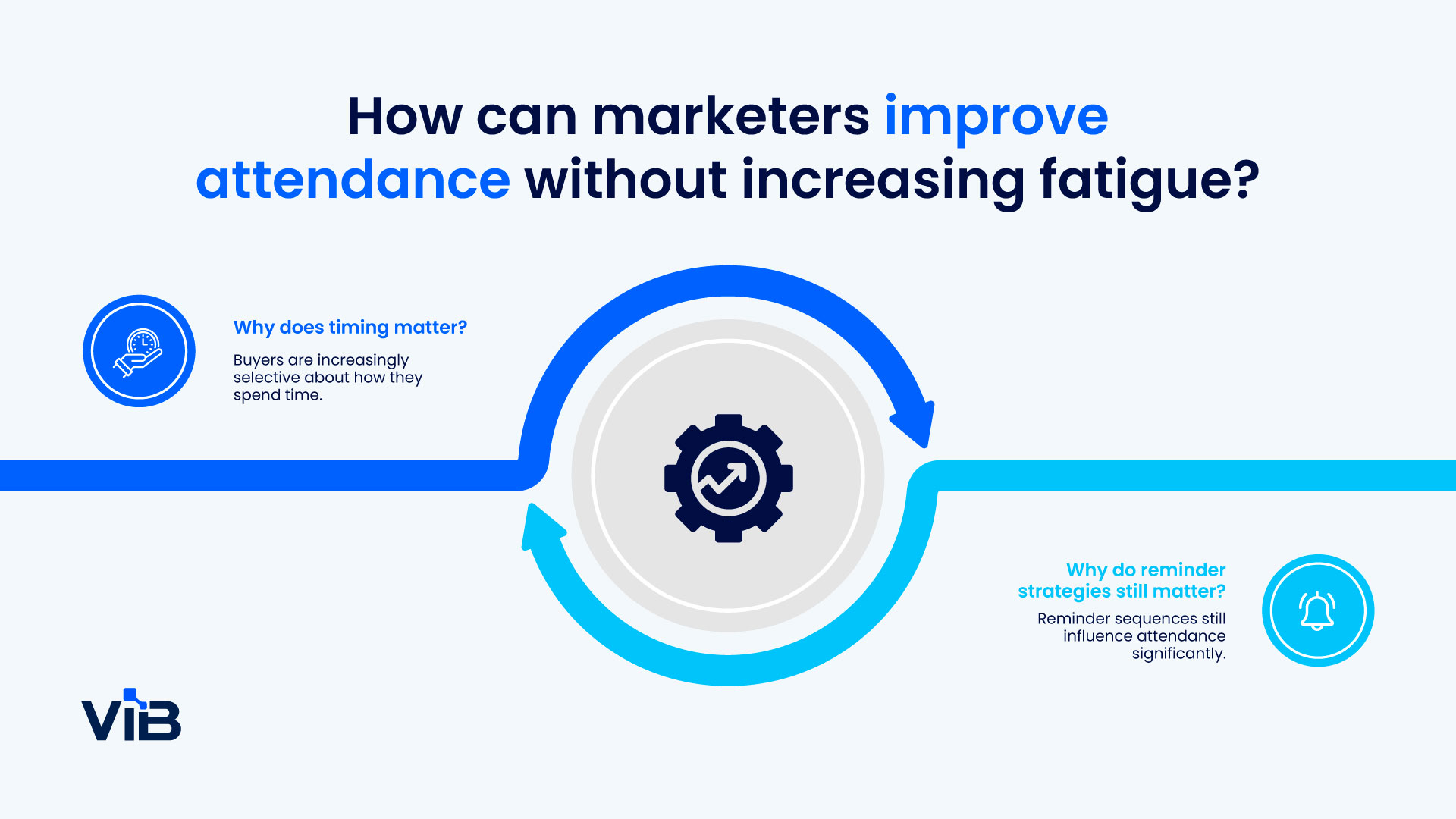
Why does timing matter?
Buyers are increasingly selective about how they spend time.
Webinars tied to planning cycles, budgeting periods, compliance deadlines, or operational changes often perform better because the topic feels immediately relevant.
Why do reminder strategies still matter?
Reminder sequences still influence attendance significantly.
But they should feel helpful, not repetitive.
Strong reminder workflows often include calendar invites, teaser insights, speaker highlights, and clear takeaways instead of repeating the same promotional message repeatedly.
That creates anticipation instead of fatigue.
Where does ViB fit into b2b saas webinar leads?
Many SaaS marketers already know how to host webinars.
The bigger challenge is consistently attracting qualified technology buyers.
That is where audience access and distribution become critical.
ViB Webinars helps B2B technology marketers extend webinar reach through the ViB Community, connecting campaigns with verified tech audiences aligned to specific ICPs.
Instead of relying entirely on internal databases, marketers can promote webinars to relevant professionals already engaging with technology-focused content and solutions.
That approach supports stronger webinar visibility while helping reduce audience fatigue from repeatedly marketing to the same contacts.
What should SaaS marketers focus on next? 🚀
Webinars still work extremely well in B2B SaaS marketing.
But the way buyers engage with webinars has changed.
The strongest b2b saas webinar leads now come from campaigns built around relevance, timing, audience quality, and post-event engagement strategy.
That means marketers should focus less on maximizing registration totals and more on improving audience fit, topic specificity, and post-webinar engagement.
The marketers seeing the best results today are treating webinars as ongoing demand generation engines, not isolated events.
That shift is what ultimately turns webinar engagement into meaningful pipeline impact.


