 Skip to content


Getting someone to register for a webinar is not the hard part anymore.
Getting the right people to register is.
That is the real challenge behind webinar promotion for B2B SaaS companies, especially in technical markets where the audience is highly specialized and often made up of decision-makers evaluating very specific operational needs.
A cybersecurity buyer does not care about the same messaging as a cloud infrastructure leader. A CIO evaluating vendor consolidation is looking for something very different than a DevOps team researching automation workflows.
That complexity changes how SaaS companies should approach webinar promotion entirely.
The strongest webinar campaigns today are not built around broad awareness. They are built around precision, relevance, and audience alignment.
Why webinar promotion is harder for B2B SaaS companies
Most B2B SaaS webinars are competing in crowded markets where buyers already receive nonstop outreach from vendors, events, newsletters, and virtual panels.
That means even strong webinar content can fail if the promotion strategy feels too broad or disconnected from the audience’s priorities.
One of the biggest mistakes SaaS companies make is assuming webinar promotion is simply a distribution problem. It is actually a targeting and messaging problem first.
Generic promotion creates generic attendance
Many webinar campaigns are promoted using broad messaging like:
“Join our webinar on AI innovation.”
The issue is that enterprise buyers rarely register for broad concepts anymore. Decision-makers want to understand:
- Why the topic matters now
- Whether the discussion is relevant to their role
- What operational challenge the webinar addresses
- Whether the session will actually teach them something useful
The more specific the webinar positioning becomes, the easier it is for the right audience to recognize themselves in the topic.
A webinar about “improving cloud visibility during infrastructure expansion” is usually much more compelling than one about “modern cloud transformation strategies.”
Webinar topics matter more than most companies realize
Strong webinar promotion starts with a topic buyers actually care about.
That sounds obvious, but many webinars are still built around the product instead of the operational issue behind the product.
Buyers generally do not register because they want to hear a vendor presentation. They register because they are trying to solve a business problem, understand an industry shift, or improve a process internally.
The strongest webinar topics connect to active priorities
For B2B SaaS companies, webinar topics tend to perform best when they align with pressures buyers are already navigating internally.
That might include conversations around:
- Infrastructure complexity
- AI adoption challenges
- Security operations visibility
- Compliance readiness
- Cloud cost management
- Scaling technical teams efficiently
A good webinar topic should immediately feel relevant to the audience’s day-to-day environment.
The goal is not simply to sound intelligent. The goal is to make the buyer think:
“This is something we are actively dealing with right now.”
Why audience targeting determines webinar quality
One of the biggest misconceptions in webinar promotion is that larger registration numbers automatically mean better performance.
For B2B SaaS companies, audience quality matters far more than audience size.
A webinar with 150 highly relevant attendees is often significantly more valuable than one with 1,500 loosely aligned registrants who never meaningfully engage afterward.
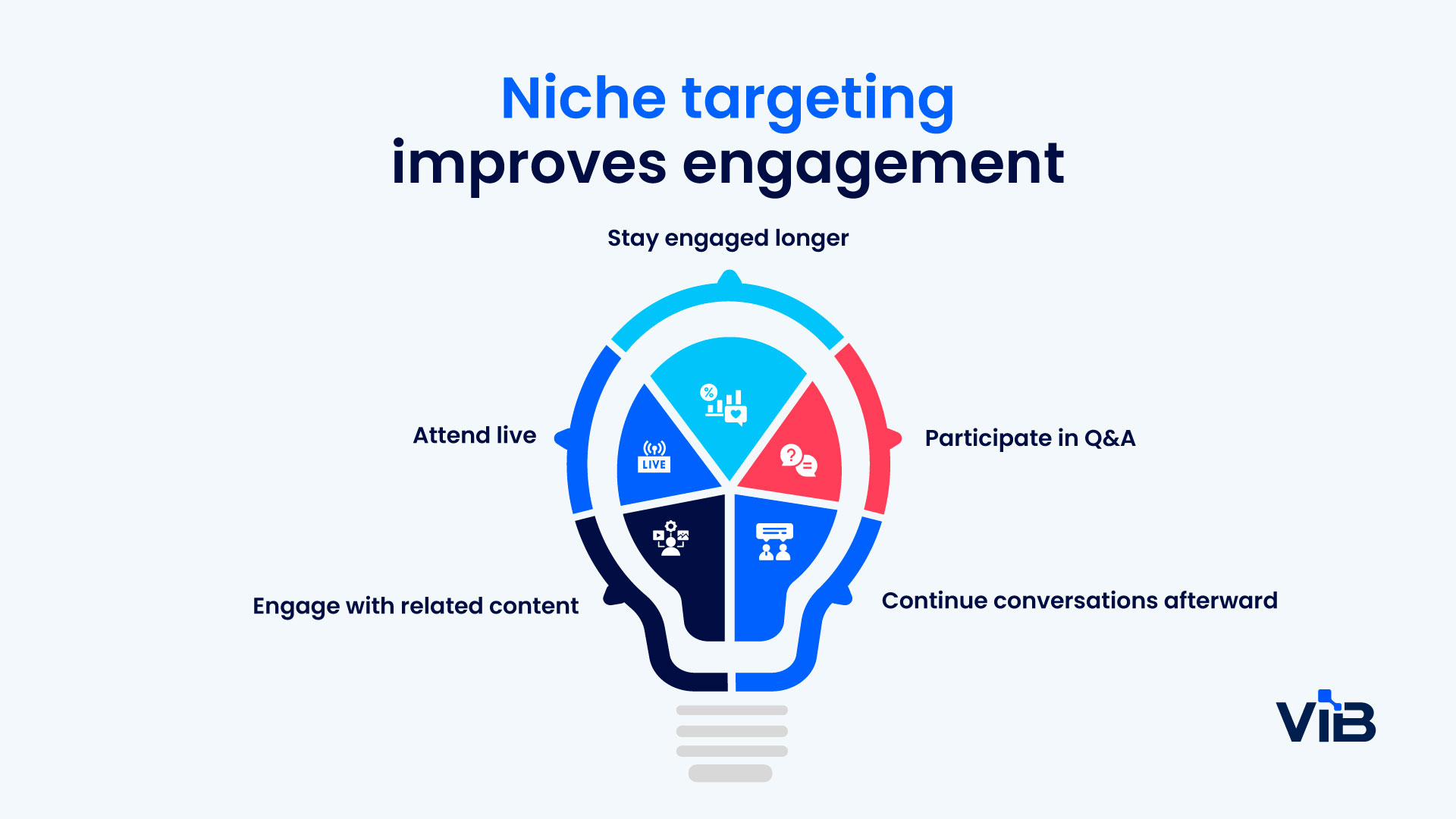
Niche targeting improves engagement
Highly targeted webinar audiences are more likely to:
- Attend live
- Stay engaged longer
- Participate in Q&A
- Continue conversations afterward
- Engage with related content
That is especially important in SaaS categories where products solve highly specialized technical or operational challenges.
A webinar focused on Kubernetes security, observability workflows, healthcare compliance automation, or enterprise AI governance does not need mass-market promotion. It needs precision.
The strongest webinar promotion strategies focus heavily on reaching buyers who are actually connected to the problem being discussed.
Webinar promotion should extend beyond your internal database
Many SaaS companies rely almost entirely on their existing email list for webinar promotion.
That often limits reach significantly, especially when the goal is expanding into new accounts or engaging audiences outside existing demand generation channels.
Internal databases are valuable, but they usually represent only a small portion of the total audience a company is trying to reach.
Multi-channel promotion improves visibility
The strongest webinar promotion strategies usually combine multiple channels together:
- Targeted email promotion
- LinkedIn campaigns
- Retargeting
- ABM initiatives
- Content syndication
- Partner amplification
The webinar becomes much easier to discover when multiple touchpoints reinforce the same topic and audience positioning.
That consistency also improves trust because buyers encounter the webinar within a broader context instead of through a single cold invitation.
Webinar messaging should sound educational before promotional
One reason many webinars struggle to gain traction is that the promotion feels too sales-focused.
Buyers can usually tell immediately when a webinar is going to become a disguised product demo.
That does not mean the webinar cannot discuss the product eventually. It means the value of the session has to stand on its own first.
Strong webinar promotion focuses on learning
The best webinar invitations usually emphasize:
- What the audience will learn
- Why the topic matters now
- What operational challenge is being explored
- What perspective or expertise the session brings
That positioning creates curiosity without sounding overly promotional.
For technical audiences especially, educational credibility matters far more than aggressive marketing language.
Webinar follow-up matters as much as promotion
Many companies treat webinar promotion as the entire strategy.
But webinar engagement should continue after the event itself.
Someone who attended a webinar has already demonstrated meaningful interest in the topic. The follow-up strategy should build naturally from that engagement instead of abruptly switching into unrelated messaging.
A buyer who attended a webinar on cloud cost optimization should continue receiving related operational content, not a generic sales sequence disconnected from the original topic.
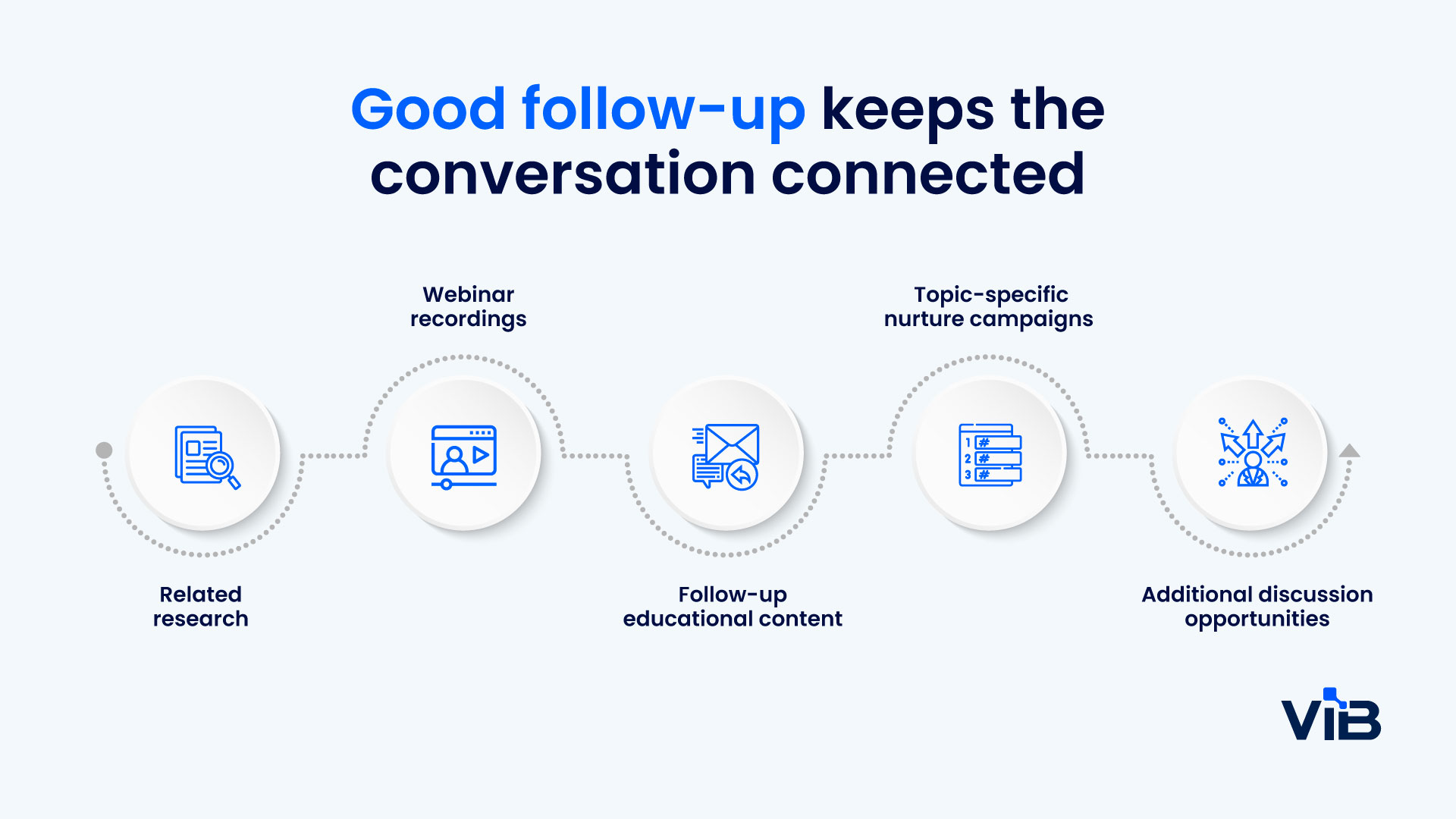
Good follow-up keeps the conversation connected
The strongest webinar nurture strategies feel like a continuation of the same discussion.
That may include:
- Related research
- Webinar recordings
- Follow-up educational content
- Topic-specific nurture campaigns
- Additional discussion opportunities
Maintaining contextual relevance is what keeps webinar engagement from disappearing immediately after the session ends.
Where does ViB Webinars fit into webinar promotion for B2B SaaS companies?
For SaaS companies trying to improve webinar promotion and audience targeting, ViB Webinars is positioned as a full-service virtual events solution focused on webinar planning, promotion, execution, and lead generation.
According to ViB, the process begins collaboratively by defining the webinar topic, target audience, and event strategy. ViB then helps manage promotion, logistics, hosting, rehearsals, and execution.
ViB also states that webinar promotion leverages the ViB Community, which consists of technology professionals and decision-makers who opt into webinars, learning opportunities, and vendor programs aligned with their interests.
ViB Webinars focuses heavily on targeted promotion
One of the more important distinctions on the ViB Webinars page is the emphasis on audience targeting and continued promotion.
According to ViB, campaigns continue being promoted to audiences matching the company’s ideal customer profile until the agreed lead target is reached or exceeded.
ViB also positions Webinars as standalone branded events instead of multi-vendor sponsorship webinars. That allows SaaS companies to maintain ownership over the audience experience, branding, and topic positioning throughout the session.
For highly specialized B2B SaaS categories, that can be especially valuable because buyers are not splitting attention across multiple vendors competing for engagement during the same event.
What should SaaS marketers focus on next?
The strongest webinar promotion for B2B SaaS companies is becoming more targeted, more contextual, and more audience-specific.
The companies seeing the best results are not simply promoting webinars more aggressively. They are creating webinar strategies aligned with the exact operational priorities their buyers are already trying to solve internally.
That shift is becoming one of the biggest advantages in modern B2B SaaS demand generation.


