 Skip to content


Webinars remain one of the most effective ways for B2B marketers to educate buyers, demonstrate expertise, and build meaningful relationships with potential customers. Unlike many other marketing formats, webinars allow organizations to explore complex topics in depth while interacting directly with an audience.
However, hosting a webinar is only half the challenge. The real difficulty often lies in attracting the right attendees. Many marketing teams invest significant time preparing speakers, presentations, and follow-up materials, only to see registrations fall short of expectations.
This gap usually stems from promotion strategy rather than the webinar itself. Understanding which webinar promotion ideas actually drive engagement can make the difference between a sparsely attended session and a meaningful conversation with qualified buyers.
Why webinar promotion matters more than the webinar itself
Many B2B marketing teams focus heavily on the event content but underestimate the role of promotion. While strong speakers and valuable insights are essential, even the best webinar will struggle to succeed if the audience never discovers it.
Webinars compete with busy schedules, crowded inboxes, and an endless stream of digital content. Without a structured promotion strategy, potential attendees may simply overlook the event.
Effective promotion ensures that the webinar reaches professionals who are already interested in the topic being discussed. When promotion aligns with audience needs and industry timing, registrations tend to increase significantly.
According to the Content Marketing Institute, webinars remain one of the most widely used content formats among B2B marketers because they support both education and lead engagement.
What webinar promotion ideas help attract qualified attendees?
The most effective webinar promotion ideas focus on reaching the right professionals rather than simply increasing the number of registrations. High attendance numbers mean little if the audience does not align with your target buyers.
Strong promotion strategies typically combine several approaches that expand visibility while maintaining audience relevance.
Email promotion
Email remains one of the most reliable channels for promoting webinars. Targeted campaigns can introduce the topic, highlight speakers, and remind potential attendees as the event approaches.
Successful email promotions often include:
- Early announcements introducing the webinar topic
- Follow-up invitations with additional context or speaker insights
- Reminder emails closer to the event date
Segmented email lists tend to perform best because messaging can reflect the priorities of specific roles or industries.
Blog and content integration
Webinars rarely exist in isolation. When a webinar topic connects to blog articles or research content, marketers can use those assets to promote the event naturally.
For example, an article exploring a market trend can conclude with an invitation to attend a webinar where experts discuss the topic in greater depth.
Social promotion
Social media promotion helps expand awareness among followers and industry professionals who may not be on an email list.
This approach works best when promotion includes a mix of formats such as short video clips, speaker quotes, or discussion prompts related to the webinar topic.
How early should webinar promotion begin?
Timing is one of the most overlooked factors in webinar success. Many teams begin promotion too late, which limits the time potential attendees have to evaluate whether the session fits their schedule.
A structured promotion timeline typically begins several weeks before the event.
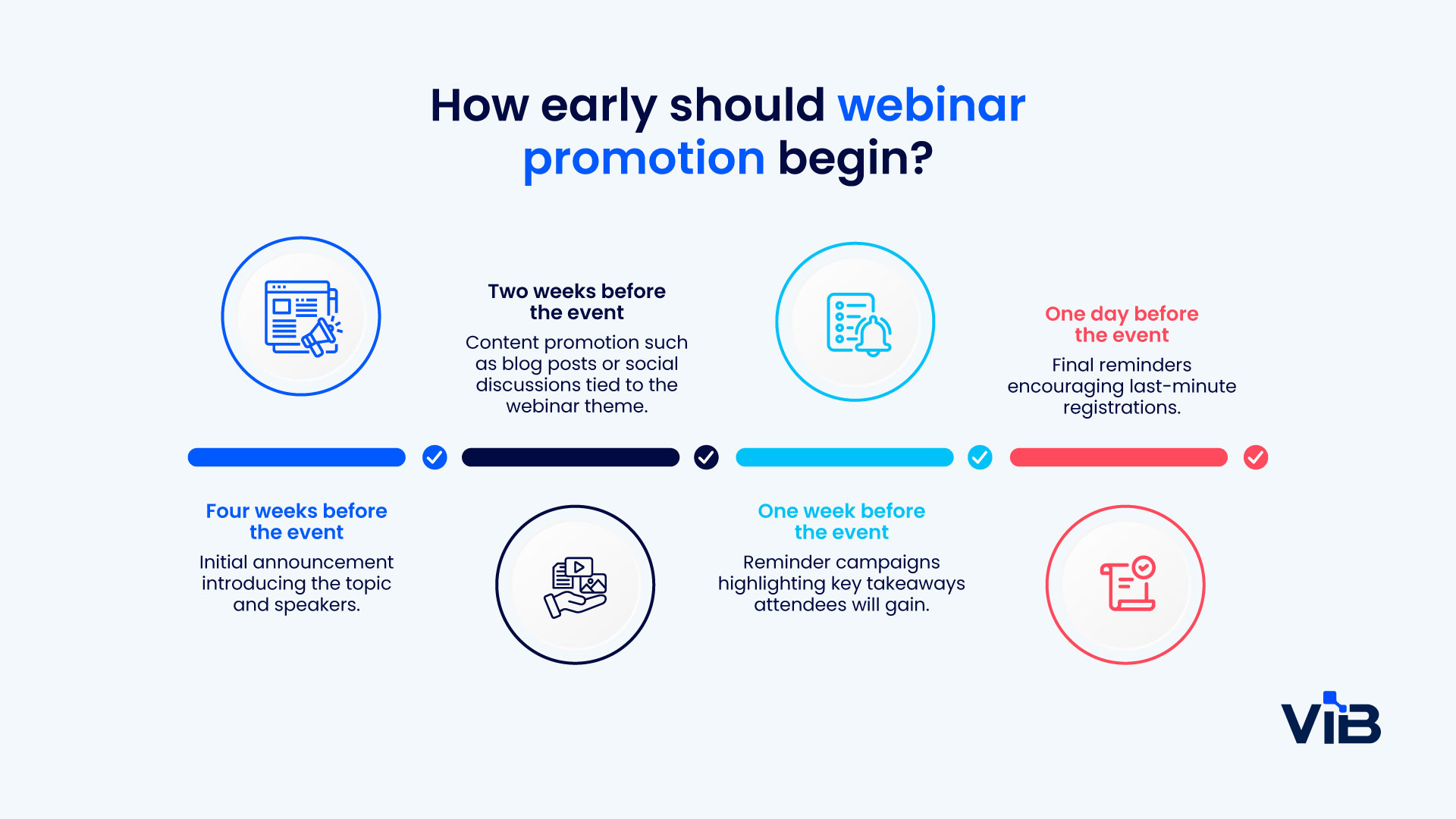
Example webinar promotion timeline
Four weeks before the event
Two weeks before the event
- Content promotion such as blog posts or social discussions tied to the webinar theme
One week before the event
- Reminder campaigns highlighting key takeaways attendees will gain
One day before the event
- Final reminders encouraging last-minute registrations
This timeline allows the audience to encounter the event multiple times across different channels, increasing the likelihood of registration.
Why audience targeting matters more than registration volume
It can be tempting to measure webinar success purely by the number of registrations. However, the quality of the audience often matters more than the size.
A smaller audience of relevant decision makers can create more valuable conversations than a large group of unrelated attendees.
Strong promotion strategies therefore focus on reaching professionals who are actively interested in the topic being discussed.
Signs your audience targeting is working
Several indicators suggest webinar promotion is reaching the right audience:
- Attendees ask thoughtful, topic-specific questions
- Follow-up conversations occur after the event
- Registrants match the organization’s target buyer profile
- Content downloads or resource requests increase after the webinar
When these signals appear, the webinar is more likely to support broader marketing objectives.
Which webinar promotion ideas help expand reach beyond existing audiences?
Many marketing teams rely heavily on internal contact databases when promoting webinars. While these lists can generate registrations, they often limit how far the event can reach.
Expanding promotion beyond existing audiences helps introduce the webinar topic to professionals who may not yet be familiar with the brand.
Several strategies can help extend webinar visibility.
1) Partner promotion
Industry partners or speakers can promote the event to their own audiences, expanding the potential reach of the webinar.
2) Community distribution
Professional communities and industry networks often include engaged audiences interested in learning about emerging trends. Promoting webinars through these channels can introduce the event to relevant professionals outside a company’s existing database.
3) Content syndication
Some organizations distribute webinar invitations through content distribution programs that target professionals based on industry and role.
These strategies help ensure that valuable discussions reach audiences who are likely to care about the topic.

Where does ViB Webinars fit into webinar promotion strategy?
Up to this point, the discussion has focused on strategy. However, executing that strategy often requires more than internal promotion, especially when email lists limit reach or teams lack the resources to fully run an event.
ViB Webinars helps marketing teams move from planning to execution by providing a fully orchestrated webinar experience that reaches targeted B2B tech professionals. Instead of managing logistics internally, marketers can focus on their topic and speakers while ViB plans, promotes, hosts, and tracks the webinar end to end.
Because the promotion happens through the ViB Community, organizations can introduce their webinar topics to professionals who match their ideal audience profile. Targeting can include job role, seniority, industry, geography, and company size, ensuring the conversation reaches the right buyers rather than relying only on existing contact lists.
This approach supports several important goals within a broader webinar promotion strategy.
1) Reaching new professional audiences
Many webinar promotions rely heavily on internal databases that may include inactive contacts or outdated roles. ViB Webinars expands reach by introducing webinar topics to a large community of technology professionals who actively engage with industry content and discussions.
2) Guaranteeing attendance and engagement
One of the biggest challenges in webinar promotion is filling seats. ViB Webinars helps address this by promoting the event through its professional community and guaranteeing a targeted number of registrants or attendees, making webinar planning more predictable for marketing teams.
3) Reducing the operational burden
Running webinars often requires significant coordination across marketing teams, from planning and promotion to hosting and follow-up. ViB handles the full process, including event setup, promotion, hosting, and performance tracking, so teams can focus on delivering valuable insights.
4) Repurposing valuable content
Organizations can also run simulated-live webinars using existing recordings, allowing them to reuse high-performing presentations or accommodate busy speakers without sacrificing audience engagement.
Rather than replacing internal promotion strategies, ViB Webinars acts as a distribution and execution extension. It helps marketing teams bring valuable conversations to targeted B2B tech audiences while removing much of the operational overhead that normally comes with running webinars.
What should marketers focus on when promoting webinars?
Successful webinar promotion depends on more than sending invitations. The most effective strategies combine thoughtful timing, targeted outreach, and distribution channels that extend beyond internal audiences.
Marketers evaluating their promotion approach should focus on several priorities:
- Reaching audiences who genuinely care about the topic
- Promoting the event across multiple channels
- Starting promotion early enough to build awareness
- Expanding visibility beyond existing contact databases
When these elements align, webinars become more than isolated events. They become valuable opportunities to share expertise, spark industry conversations, and connect with professionals who are actively exploring new ideas.


