 Skip to content


Too often, a B2B-marketing team will hit the ground running. At first, all goes well. Then they run into a wall and struggle to scale their marketing campaigns. We’ve all been there, being burnt out by not having a repeatable B2B demand generation strategy.
Without repeatability in today’s complex world of B2B marketing, there’s no predictability. And without marketing predictability, it’s a struggle to generate predictable profits. This uncertainty and burnout affects everyone in some way or another — CEOs, CMOs, business owners, and more.
As experts in demand generation, we know repeatability is the key to creating a dynamic, ongoing B2B marketing strategy that continually reaps the lead generation results you want.
So pull up your favorite chair. We’re going to dive into the most common pitfalls and tactical tips to ease burnout.
What makes a repeatable B2B marketing strategy?
A repeatable B2B marketing strategy is like a blueprint that runs on the same basic ingredients, for a longer time.
These ingredients consist of foundations like a great brand story, consistent execution by both internal and external stakeholders, and a mechanism to turn your customers into advocates.
Even if (or when) you run out of eureka moments, a strategy that’s repeatble should keep giving you results.
More specifically, they should address some of these biggest challenges B2B marketers face when running their day-to-day operations:
Challenge 1 – One-hit wonders
Often someone on the marketing team will have a brilliant idea. You run with it and it’s a success. However, it’s a one-hit wonder, like singers who are known for only one amazing song.
Yes, they generate sales, but only for a short time. Then you’ve got to keep coming up with more short-term brilliant ideas to sustain the momentum.
Challenge 2 – Being overly reactive instead of proactive
Remember when everyone was writing content about COVID? While it seemed like a good idea at the time, all that content is pretty irrelevant now. This is a great example of being overly reactive to marketing pressures.
To avoid wasting time and creating inefficiencies, the smarter approach is to be proactive. This means strategically determining your ideal long-term plan and marketing sticking to it.
Challenge 3 – Underprioritizing repurposing
53% of marketers say they are focused on repurposed content this year, making it the #1 B2B marketing trend we’re seeing this year.
And they’re absolutely right. Whether the campaign is a one-off execution, or there’s not much potential to extend its lifespan, putting a lot of resources into a campaign that runs only once can be really draining.
Step 1 — Build a strong brand before showing It off
For B2B companies, brand recognition is how well your target audience can recall your brand and identify your products. It’s the major indicator of how well your audience differentiates your company from your competitors.
While it’s tempting to want to jump into lead generation strategies right away, building a strong brand is what that sets the foundations for successful markeing activities.
Powerful brands have a full-bodied identity that includes a set of core values, a distinct style, and unique voice and message. When done right, your brand will help you sell in the cluttered tech market.
5 steps in building a B2B brand strategy
1. Define what makes you unique
Think about what problems you can solve that make you stand out. That’s what will help you define your brand’s mission, values, and unique selling proposition (USP). Understand what sets your B2B business apart from competitors and how you want to be perceived by your target audience.
2. Know your target market
Use customer insights, engagement data, and feedback to understand the needs, pain points, and preferences of your best customer segments. And to put this into action, and create distinct ideal customer profiles for your stakeholders to easily refer to.
3. Craft a memorable brand narrative and personality
Now, add emotion! Develop a compelling brand story that communicates your company’s history, values, and journey. Humanize your brand, as if it’s a real person. A well-crafted brand story with lots of character helps create an emotional connection with your audience, fostering brand loyalty.
4. Design your visual identity
With the goundwork done, bring your brand to life through visuals, including colors, styles, and logos. These help make a lasting visual impression and aid brand recognition.
5. Create your voice and messaging
Just like what you’ve done with your visual identity, develop a distinct and consistent tone of communication that reflects your brand’s personality. Craft a clear brand voice, tagline, and messages that resonate with your target audience and remains consistent across all communication channels.
With your brand defined, you’re now ready for the next phases — to get your brand out in the world and in front of the people you want to reach.
Step 2 — Invest in your inbound marketing engine
Inbound marketing, often referred to as “pull marketing” is seen as a more intentional and fluid way of interacting with customers.
Rather than pushing your brand out to the customer, you bring them in through interesting, beneficial content like blogs, SEO, and social media posts. According to Hubspot, over 29% of marketers use an SEO-optimized website and blog to attract and convert leads. The low upfront cost and high success rate, make SEO-optimized web copy and blogs one of the highest ROI marketing channels.
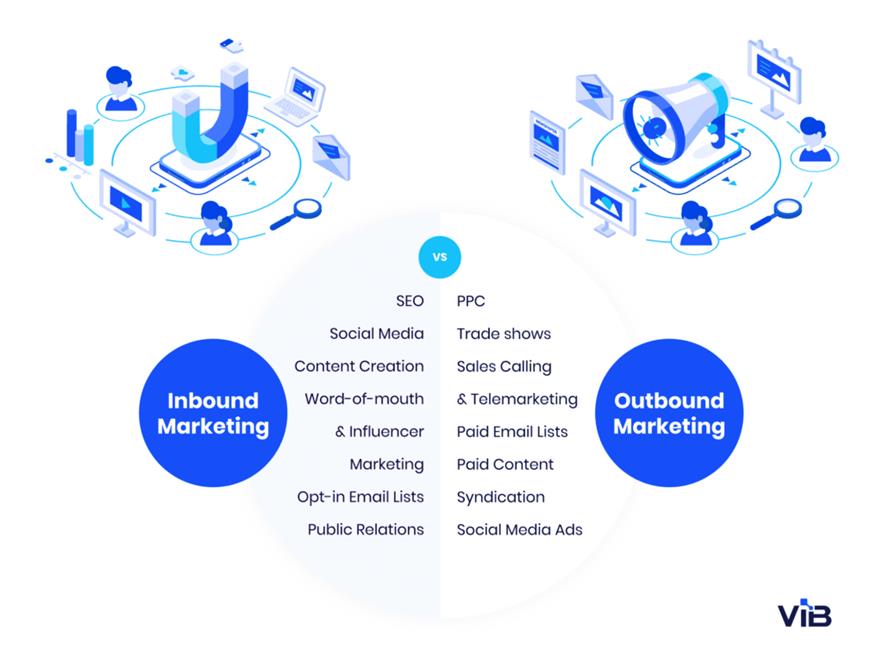
Unlike outbound marketing, inbound is a more sustainable approach to marketing because it focuses on building relationships with potential customers, instead of interrupting them with comparatively more sales-heavy approaches like ads, cold calling and cold emailing.
Also, with inbound marketing now a norm, prospects have come to enjoy the act of exploring, researching, and buying what they need on demand. You can support this preference by ensuring that your website, social media, and campaigns are rich with quality content.
Creating a content marketing plan as a repeatable inbound channel
Content is a your “magnet” when it comes to inbound marketing. While it may take some time to see your content reap rewards, keep investing in churning out a high volume and qualify of content.
As a brief guide, the basics of a content marketing plan include:
1. Defining your mission and strategy. Understand your target audience’s preferences, pain points, and interests. Then, plan out content that speaks directly to their needs and offers valuable solutions.
2. Producing strategic content assets that align with your audience’s needs, whether they are blog posts, data-driven thought leadership, or even webinars and virtual experiences
3. Promoting the content to the fullest. Develop a comprehensive distrubution plan for each piece of content, utilizing social media, email marketing campaigns, and partnerships with influencers and syndication networks.
4. Measure your results — and repeat! Monitor analytics to track content performance, focusing on metrics like engagement, conversion rates, and content attributed pipeline. Use insights to iterate on your strategy, repurpose successful content, and enhance underperforming areas.
Get 2-3x more downloads with content syndication
B2B content syndication platforms republish your digital content accross third-party sites, helping you attract more attention, and even qualified downloads and leads.
Step 3 — Get support from vendors and agencies
Now, we’re not saying to not engage in outbound marketing! It’s a tried and tested method of marketing that seeks to push messaging out to potential customers to generate new prospects. Outbound marketing includes activities such as buying lead lists, paid outreach, email campaigns, and SDR outreach.
The biggest drawback is the lack of repeatability in outbound marketing initiatives. That said, it can also be very effective — when you tap into the right lead generation services.
A specialized outbound lead generation agency can deliver several benefits, including lower costs and better results. Basically, their expertise, scale, and proprietary lead generation approach can help you gain a lower cost per lead and more ROI.
Tactical examples of outbound services you can hire a specialist to do for you include:
- Email marketing: An effective email marketing service can help you fill your funnel with qualified leads to keep your sales team busy.
- Webinar marketing: With many moving parts that go into building a strong virtual event, consider a end-to-end webinar marketing service to plan, host, and generate leads to your event.
- Appointment setting. A B2B apointment setting service helps schedule meetings with prospects for you, that comes in handy if you’re scaling up sales efforts, or are running behind your quotas to keep your sales pipeline full.
Take this customer story from startup Abnormal Security for example, where they tapped into ViB’s outsourced appointment setting services to drive 67x ROI.
Of course, when choosing the right B2B lead generation agency, make sure to do your research. Some bigger factors to consider are:
- How do they deliver leads – is the approach legitimate and proven?
- Quality of leads delivered – do they fit your ideal customer profile and have good chances of converting into opportunities?
- What their pricing model is — how do they offer leads as a service?
With ViB for example, we use a proprietary list of prospects that you can leverage. ViB has a community of millions of influential and powerful technology professionals who help make the most important buying decisions in industries, like IT, engineering, operations, sales, marketing, and more. This community is what keeps lead generation powerful yet inexpensive.
Pro Tip: To get the most from your marketing dollars, choose an agency that pays per result — like a pay per lead company. As opposed to lump sum or monthly fees, pay per lead means that you only pay for quality leads delivered.
Step 4 — Think of your customer journey as an infinite loop
As a B2B marketer, you’re probably familiar with the buyer’s journey. It’s a handy tool for understanding how prospects move through your sales funnel — from awareness to consideration to buying.
But what happens after they purchase? The buyer’s journey doesn’t end there. In fact, it’s just beginning.
The “after-purchase journey” is all about retention and advocacy — getting customers to come back to you again and again, or even encouraging others to join them.
Turning your existing customers into evangelists and loyalists
When you think about how much effort goes into building new accounts, it becomes clear that customer retention is just as important as acquisition.
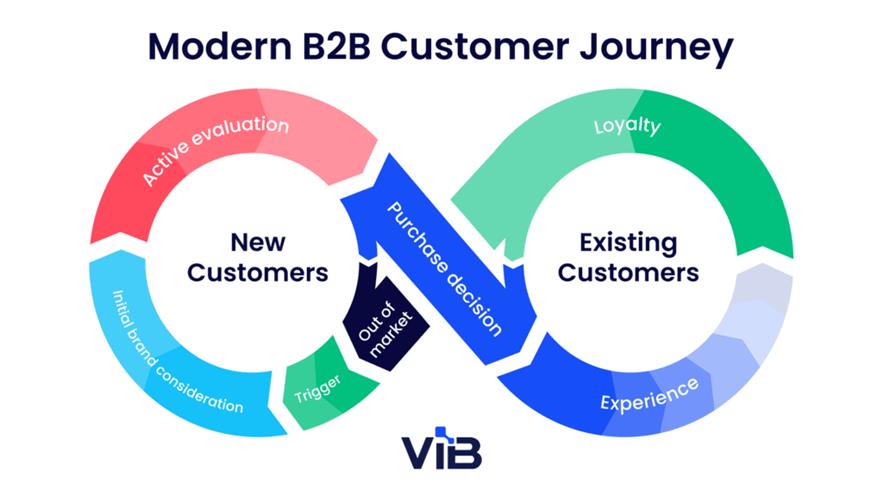
By enlisting the help of your happy customers and keeping them around longer than just one purchase, you can perpetuate the customer journey to drive growth that’s repeatable.
Having your customers do your work is one of the most cost-effective and repeatable tactics any marketer can imagine – once you have a sound customer success and referral system in place.
Here are three examples of ways to leverage the power of customer evangelists and loyalists.
- Offer incentives for new contact referrals. When a brand delivers a great customer experience, organic word-of-mouth will naturally follow. But you can also incentivize your customers to take the initiaitve in making referrals.
- Gather testimonials and case studies — and frame your customers as heroes. When your customers say your products are excellent, it packs a bigger punch with prospects than if you say it, increasing chances of new customers entering your loop.Most of them will also be happy to give soundbites for public recognition. You could re-engage them through written success stories or even virtual events, which all contribute to building stronger partnerships, whilw proving your expertise in a credible way.
- Upsell and cross-sell to extend the customer journey. Upselling is about raising the size of an order, or even an upgraded version of your product or service. With cross selling, you put forward complementary products or services like add-ons that enhance the main product offering in some way.
Build a scalable and repeatable B2B lead generation strategy with ViB
Need a guiding hand to see more consistent marketing outcomes?
We’re here to help. ViB is your go-to demand generation partner, and we have a pretty unique story behind our proprietary approach that drives our ecosystem of demand generation services:
- ViB Emails: Build connections with new customers that go beyond your mailing list.
- ViB Appointments: Generate meetings with qualified prospects to build a sales pipeline fast.
- ViB Syndication: Expose high-value content to prospects who may never find your brand organically.
- ViB Webinars: Transform ordinary, static virtual events into interactive, lively round table conversations.
More importantly, our clients stick around because they see results in action — think a steady stream of solid leads that turn into sales, with a reliable pay-per-lead approch that keeps costs manageable.
See how we can help generate a steady flow of top-notch leads — just what you need to shine in your industry today.


