 Skip to content


Performance marketing in B2B has moved far beyond optimizing channels or chasing lower CPLs. In 2026, performance is judged by whether marketing creates measurable progress toward revenue, not just activity.
For experienced B2B tech marketers, the challenge is no longer understanding performance marketing. It’s redesigning how performance works in a buying environment that is slower, more selective, and far less forgiving of wasted spend.
This blog breaks down what performance marketing in B2B really means today, where most strategies quietly fall apart, and how modern teams build programs that sales teams actually trust. 📊
What does performance marketing in B2B really mean today?
At its core, performance marketing in B2B is about accountability to outcomes. That accountability extends beyond the first conversion and into how buyers engage, signal intent, and move toward a real decision.
High-performing teams no longer ask whether a campaign generated leads. They ask whether it reached the right accounts, influenced buying behavior, and created forward motion.
Because B2B buying journeys are nonlinear, performance marketing must support timing and momentum, not just capture interest.
Why are traditional B2B performance metrics breaking down?
Many teams report strong numbers while sales teams struggle to convert. This disconnect usually comes from how success is defined.
Clicks and form fills are easy to measure, but they rarely reflect buyer readiness. When all conversions are treated the same, marketers lose visibility into what is actually driving outcomes.
The result is delayed feedback. By the time underperformance becomes obvious, budget has already been spent and opportunities have passed.
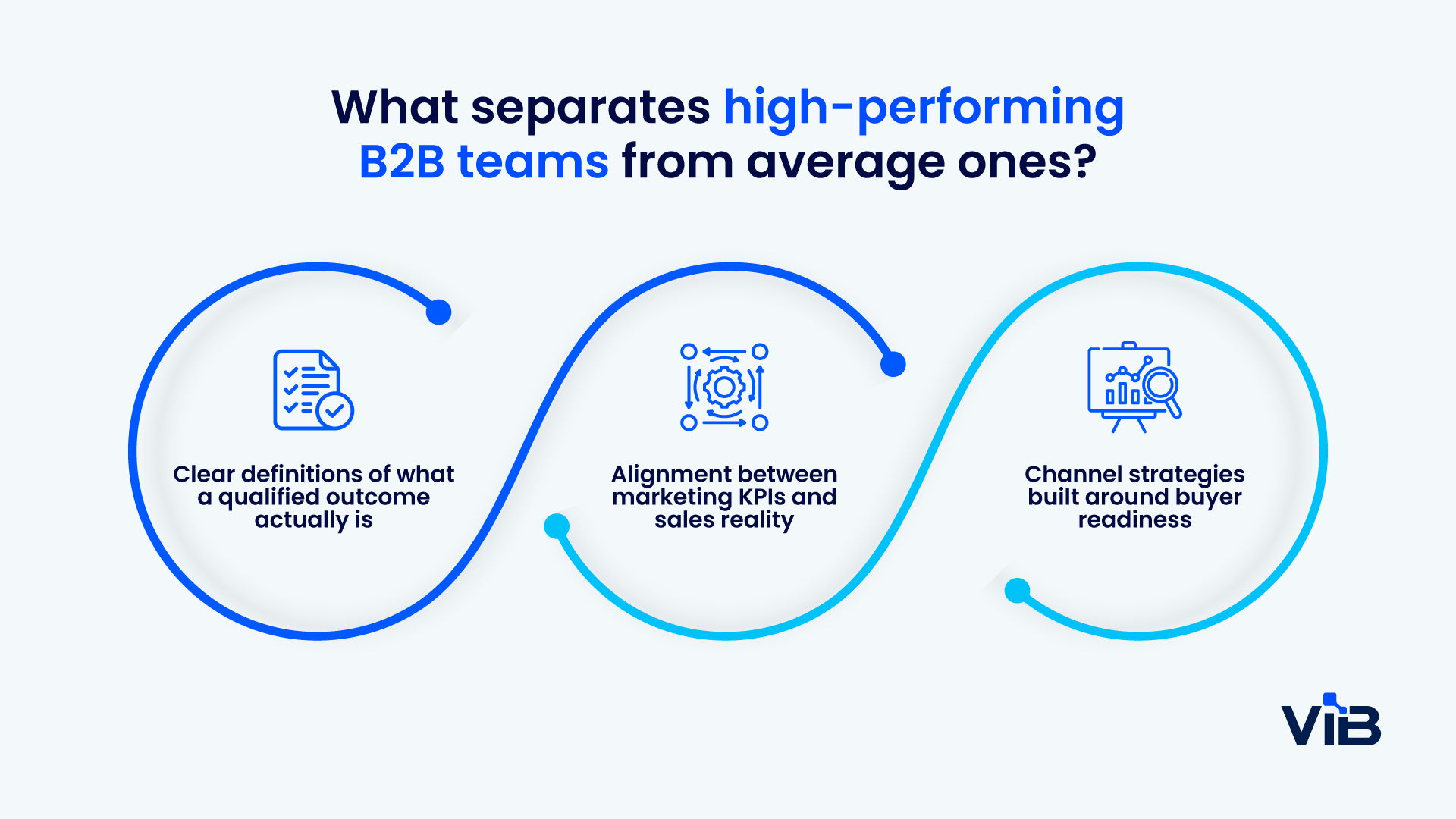
What separates high-performing B2B teams from average ones?
High-performing teams design performance into their strategy from the start. They do not rely on volume to compensate for weak signals.
In practice, this often means:
- Clear definitions of what a qualified outcome actually is
- Alignment between marketing KPIs and sales reality
- Channel strategies built around buyer readiness
These teams frequently generate fewer leads, but those leads convert faster and require less effort from sales.
How important is audience quality in performance marketing?
Audience quality is the single biggest lever in performance marketing in B2B. When targeting is off, optimization becomes guesswork.
Strong audience strategies combine firmographics with behavioral context. Role, industry, and company size still matter, but engagement patterns add clarity around intent.
When audience quality improves, performance metrics stabilize and attribution becomes easier to defend.
Why does intent matter more than volume in B2B performance marketing?
Intent determines timing, and timing determines results. Without intent, even well-targeted campaigns struggle to convert.
High-performing teams look for patterns rather than isolated actions. Repeat engagement, content depth, and cross-channel interaction all signal readiness.
By prioritizing intent over volume, marketers reduce wasted spend and engage buyers when they are more likely to take action.
How should content support performance marketing in B2B?
Content becomes a performance asset only when distribution is intentional. Creating strong content is table stakes, but distribution determines impact.
Performance-driven content strategies focus less on how much content is produced and more on who sees it, when they see it, and what happens next.
When content is aligned to buyer stage and delivered through channels that reach the right audience directly, it becomes a reliable performance lever.
How should B2B teams think about performance marketing channels?
Not every performance channel is designed to solve the same problem. Performance strategies usually break down when teams expect a single channel to handle reach, intent validation, and conversion all at once.
High-performing B2B teams choose channels based on the outcome they need to drive next, then layer channels together as buyers progress.
1. Where does email fit into modern B2B performance marketing?
Email works best when the goal is extending reach and staying visible with the right audience over time.
Rather than relying only on owned lists, performance-driven teams use email to amplify campaigns to ICP-aligned buyers without exhausting internal databases. When relevance and timing are prioritized, email supports early influence and reinforces later-stage conversion.
2. How does content syndication support performance marketing goals?
Content syndication is most effective when teams need clearer signals around topic-level interest.
By putting high-value assets in front of the right decision-makers, syndication helps marketers understand what resonates before buyers are sales-ready. It bridges the gap between awareness and intent by turning content engagement into a measurable performance signal.
3. When do appointment-based models make the most sense?
Appointment-based programs are designed for moments when clarity matters more than volume.
Instead of optimizing for engagement signals, teams invest in confirmed conversations with qualified buyers. This creates tighter alignment with sales and makes performance easier to measure, defend, and optimize in the short term.

Where do ViB’s solutions support performance marketing in B2B?
Once a strong performance framework is in place, execution depends on choosing solutions that reinforce outcomes rather than inflate metrics.
- ViB Emails amplifies your existing email campaigns by sending them to a curated community of verified, high-tech professionals that match your ICP. ViB manages list curation, delivery, and tracking, allowing marketers to extend reach.
- ViB Content Syndication helps performance marketers get more value from their best assets. High-value content is promoted directly to opted-in decision-makers within the ViB Community, with targeting based on role, industry, and relevance.
- ViB Appointments delivers qualified buyers to schedule meetings with who have actively opted in to learn more. Meetings are only counted when they are held, which creates clearer accountability and stronger alignment between marketing investment and sales outcomes.
Each solution supports a different stage of the performance journey, from early engagement to sales-ready conversations.
Curious how your content or messaging could perform with a fresh audience? Try a ViB email or content syndication pilot to test results from real tech decision-makers before scaling further. 🚀
What does effective performance marketing in B2B look like moving forward?
In 2026, performance marketing in B2B will continue moving away from surface-level metrics. Teams that succeed will focus on clarity, alignment, and outcomes they can confidently defend.
That means designing programs around buyer behavior, investing in channels that create measurable progress, and treating performance as a connected system rather than isolated tactics.
When performance is built intentionally, results become more predictable and marketing earns its seat at the revenue table. 🤝


