 Skip to content


Performance-driven marketing is no longer a nice-to-have for B2B teams. It’s becoming the default expectation.
As budgets tighten and leadership asks harder questions, marketers are under pressure to prove their work drives real outcomes.
Not clicks for the sake of clicks or downloads that go nowhere, but measurable buyer action that supports growth.
This shift isn’t about adopting a new buzzword. It’s about changing how marketing is planned, executed, and evaluated. Teams that embrace performance-driven marketing are moving away from campaign chaos and toward repeatable systems that create clarity, accountability, and momentum heading into 2026. 🎯
What is performance-driven marketing?
Performance-driven marketing is a strategy built around outcomes, not activity.
Instead of asking “How many impressions did we get?” or “Did this campaign launch on time?” performance-driven marketing starts with different questions:
What action do we want buyers to take? How can we reach them effectively? How will we measure success?
In practice, that means marketing efforts are designed to influence real buyer behavior. That could include meaningful engagement, qualified conversations, or progression toward a buying decision. The channel is secondary to the outcome.
This approach contrasts with traditional demand generation models that often focus on volume and visibility. Performance-driven marketing prioritizes effectiveness over exposure and intent over reach.
Why performance-driven marketing matters more heading into 2026
B2B marketers are operating in a tougher environment than they did just a few years ago.
Organic reach continues to decline. Paid channels are more competitive and expensive. Buyer journeys are longer, less linear, and harder to track.
At the same time, leadership teams want more precise answers about what marketing is contributing and why it deserves continued investment.
Performance-driven marketing addresses these questions directly.
By tying marketing efforts to outcomes that leadership understands, marketers can defend budgets, justify strategy shifts, and make smarter decisions faster. Instead of reacting to underperforming campaigns, teams can adjust based on clear signals and performance data.
Most importantly, this approach reduces guesswork. It replaces “we think this is working” with “we know what’s working and why.”
The core principles of performance-driven marketing
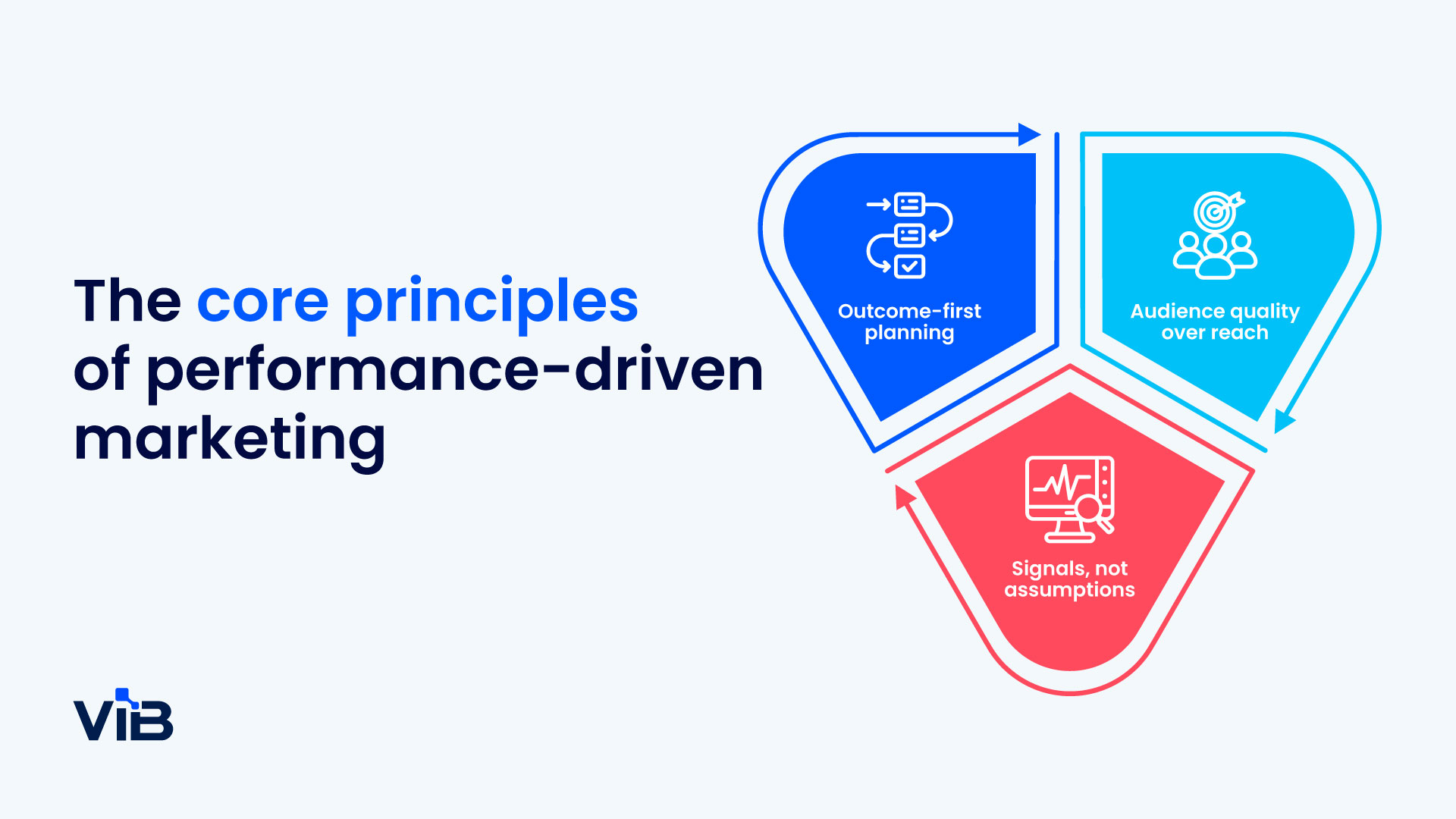
While performance-driven marketing looks different across organizations, high-performing teams tend to follow a few shared principles.
Outcome-first planning
Performance-driven marketing starts with clarity.
Before choosing channels, tactics, or creative, your team should define what success looks like. That might mean booked meetings, qualified engagement, or repeat interactions from the right accounts.
When outcomes are clear upfront, execution becomes more focused. Teams avoid launching campaigns simply because they “need something live” and instead build programs designed to move buyers forward.
Audience quality over reach
Reach alone doesn’t create performance. Broad reach can inflate surface-level metrics, but it often dilutes performance.
Performance-driven marketing prioritizes the right audience over the largest audience. That means clearly defined ICPs, thoughtful segmentation, and messaging that speaks to buyer needs at the right moment.
High-performing teams accept smaller audiences in exchange for stronger signals and higher intent.
Signals, not assumptions
Assumptions are expensive. Performance-driven marketing relies on observable buyer behavior rather than gut instinct. Engagement with content, responses to outreach, and willingness to have conversations all signal readiness and interest.
These signals help teams refine targeting, adjust messaging, and double down on what’s working without waiting for quarterly reports.
Performance-driven marketing vs. traditional demand generation
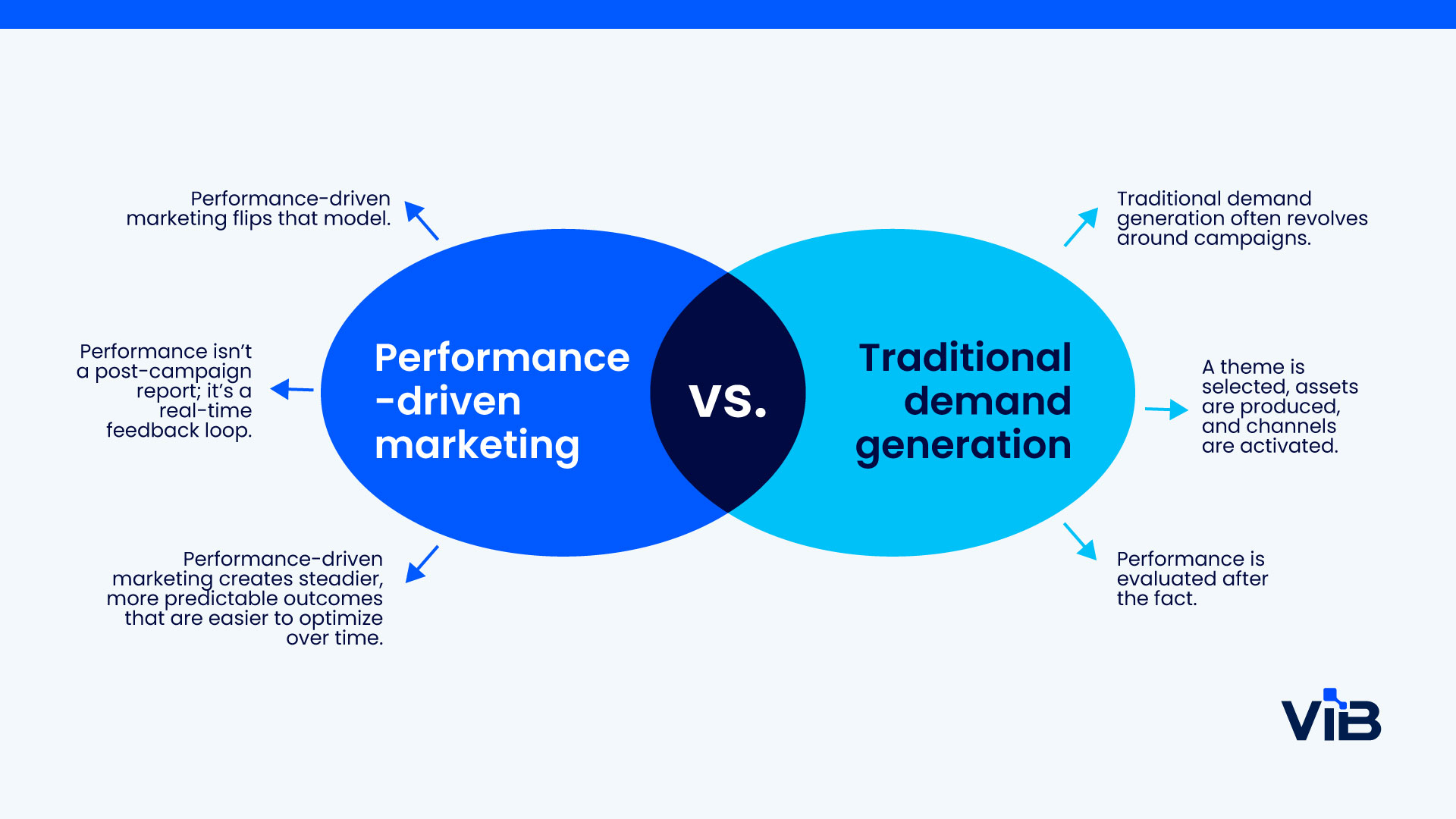
Traditional demand generation often revolves around campaigns. A theme is selected, assets are produced, and channels are activated. Performance is evaluated after the fact.
Performance-driven marketing flips that model.
Instead of launching campaigns and hoping for results, teams design systems that continuously generate and validate demand. Performance isn’t a post-campaign report; it’s a real-time feedback loop.
This shift reduces volatility. Rather than relying on occasional spikes in activity, performance-driven marketing creates steadier, more predictable outcomes that are easier to optimize over time.
Channels that support performance-driven marketing
Performance-driven marketing doesn’t depend on a single channel. It depends on how channels are used and measured.
Email as a performance amplifier
Email remains one of the most effective tools for performance-driven marketing when done right.
Performance-driven email focuses on audience quality, relevance, and engagement—not sheer send volume. Messages are designed to prompt action, whether that’s reading content, replying, or booking a meeting.
When email is treated as an amplification channel rather than a broadcast tool, it becomes a reliable performance driver instead of a source of fatigue.

Content syndication with accountability
Content syndication often gets a bad reputation because it’s measured poorly.
In a performance-driven model, success isn’t defined by downloads alone. It’s defined by what happens after content is consumed. Are buyers engaging again? Do those accounts show intent? Are conversations starting?
Used thoughtfully, content syndication helps validate demand and surface early buying signals, especially when paired with clear qualification and follow-through.
Appointment-based programs for buyer action
Clicks and form fills don’t always translate into momentum.
Appointment-based programs play a critical role in performance-driven marketing by prioritizing conversations over consumption. When buyers agree to talk, performance becomes easier to measure and easier to defend.
For teams under pressure to show tangible outcomes, conversations often speak louder than dashboards. 🤝
Common mistakes that break performance-driven marketing
Even teams with the right intent can struggle if execution isn’t aligned.
One common mistake is chasing channel trends without a clear outcome in mind. Another is measuring what’s easiest instead of what matters. Volume-heavy tactics can look impressive on paper while delivering little real value.
Performance-driven marketing also breaks down when reporting becomes the goal rather than the gauge. Metrics should guide decisions, not just justify activity.
Where ViB fits into a performance-driven marketing strategy
ViB helps B2B teams execute performance-driven programs across several channels, including:
- ViB Emails: Send your email from our trusted domain to thousands of targeted, high-tech prospects in the ViB Community.
- ViB Syndication: Match your assets to high-tech professionals who are eager to read about new solutions. With our qualified download guarantee, we vet every lead to ensure it meets your targeting criteria.
- ViB Webinars: Get a fully orchestrated webinar with a guaranteed, qualified audience—just provide your topic and speakers.
- ViB Appointments: Secure high-value meetings with prospects who voluntarily apply to meet with you. You pay only for qualified meetings held.
Instead of focusing on vanity metrics, ViB programs are designed to surface intent, validate demand, and create measurable outcomes.
Building a performance-driven marketing engine that scales
Performance-driven marketing isn’t a campaign you launch once; it’s a system you refine over time.
As teams head into 2026, the marketers who win won’t be the ones doing the most. They’ll be the ones doing what works, measuring it clearly, and scaling with intention.
When performance becomes the foundation rather than an afterthought, marketing stops feeling reactive and becomes a strategic advantage. ⭐


