 Skip to content


Technology marketing moves fast, and buyers move even faster. Budgets shift, new tools launch every day, and digital channels are increasingly crowded. To stand out, marketers need insight into the needs, research behavior, and priorities of their best-fit accounts.
Intent and engagement data can help provide that context. By combining first-party behavior, CRM activity, content engagement, and reputable third-party signals, marketers can understand where interest is developing. This makes email, advertising, content, and event campaigns more relevant and measurable. 📏
Core marketing strategies for technology companies
1. Content marketing and thought leadership
Publish insights that help your audience make smarter decisions. Use long-form articles, case studies, and webinars to show expertise and support internal change management. Great content builds credibility and positions your brand as a trusted voice in the tech ecosystem.
2. Account-based marketing (ABM)
When combined with account-fit and engagement data, ABM becomes more effective by helping teams prioritize accounts showing sustained interest in relevant topics.
3. Email marketing with intent data
Use account-level engagement signals to identify companies researching relevant topics. Combine those signals with CRM activity, webinar registrations, and content engagement to time outreach and tailor messages to each buyer’s role and stage. The goal is fewer, more relevant emails not more volume.
4. Content syndication for reach
Amplify your best thought leadership to verified tech audiences. Syndicating assets ensures your insights reach in-market researchers—not just random website visitors. Distribute reports, guides, and webinars where your ideal buyers are already engaging.
When syndication engagement is connected with first-party campaign data, it becomes easier to identify which topics and formats resonate with priority accounts. Use those insights to plan follow-up content and nurture sequences without assuming that every interaction indicates purchase readiness.
5. Multi-channel advertising and retargeting 🎯
Reinforce your brand narrative across search, programmatic, and social channels. Retargeting keeps your solution top of mind throughout long B2B buying cycles. Consistency across touchpoints builds familiarity and trust, especially in complex tech categories.
By combining first-party engagement, CRM data, and account fit, marketers can focus media spend on audiences with both relevance and demonstrated interest. This can improve CTR, reduce wasted impressions, and create messaging that reflects the buyer’s actual research stage.
6. Event and webinar marketing
Use previous content engagement, webinar activity, and stated interests to segment event invitations. Instead of relying on generic promotion, tailor the topic, format, and follow-up to what each audience has already shown interest in.
With Deal Intent, you can identify which companies are already engaging with similar topics before you invite them. Instead of generic event promotion, you can personalize invitations to match each attendee’s research interest.

If you’re looking for an agency to help you nail down these marketing strategies. Download our quick guide, 15 Questions for Your B2B Lead Generation Agency
How intent data transforms B2B tech marketing
Intent data changes the game for technology companies. Instead of casting a wide net, you can focus resources on accounts showing real signals—like increased content consumption, search activity, or topic engagement.
This insight helps marketers:
- Prioritize campaigns toward accounts already researching your category.
- Coordinate sales and marketing with shared visibility into who’s in-market. 👀
- Personalize messaging by stage, need, and urgency.
- Reduce waste by focusing ad spend and email outreach on active prospects.
Intent-driven marketing means every dollar and every impression counts.
How intent signals help technology marketers act faster
ntent signals can help technology marketers recognize when target accounts are researching a problem, comparing approaches, or engaging more deeply with relevant content. Useful signals may come from first-party website activity, CRM history, event participation, content engagement, and reputable third-party research data.
With a documented intent framework, marketers can:
- Prioritize accounts using fit, recency, and depth of engagement.
- Identify the topics and formats each buying group is consuming.
- Share relevant signals through CRM and ABM workflows.
- Give sales teams context for timely and helpful outreach.
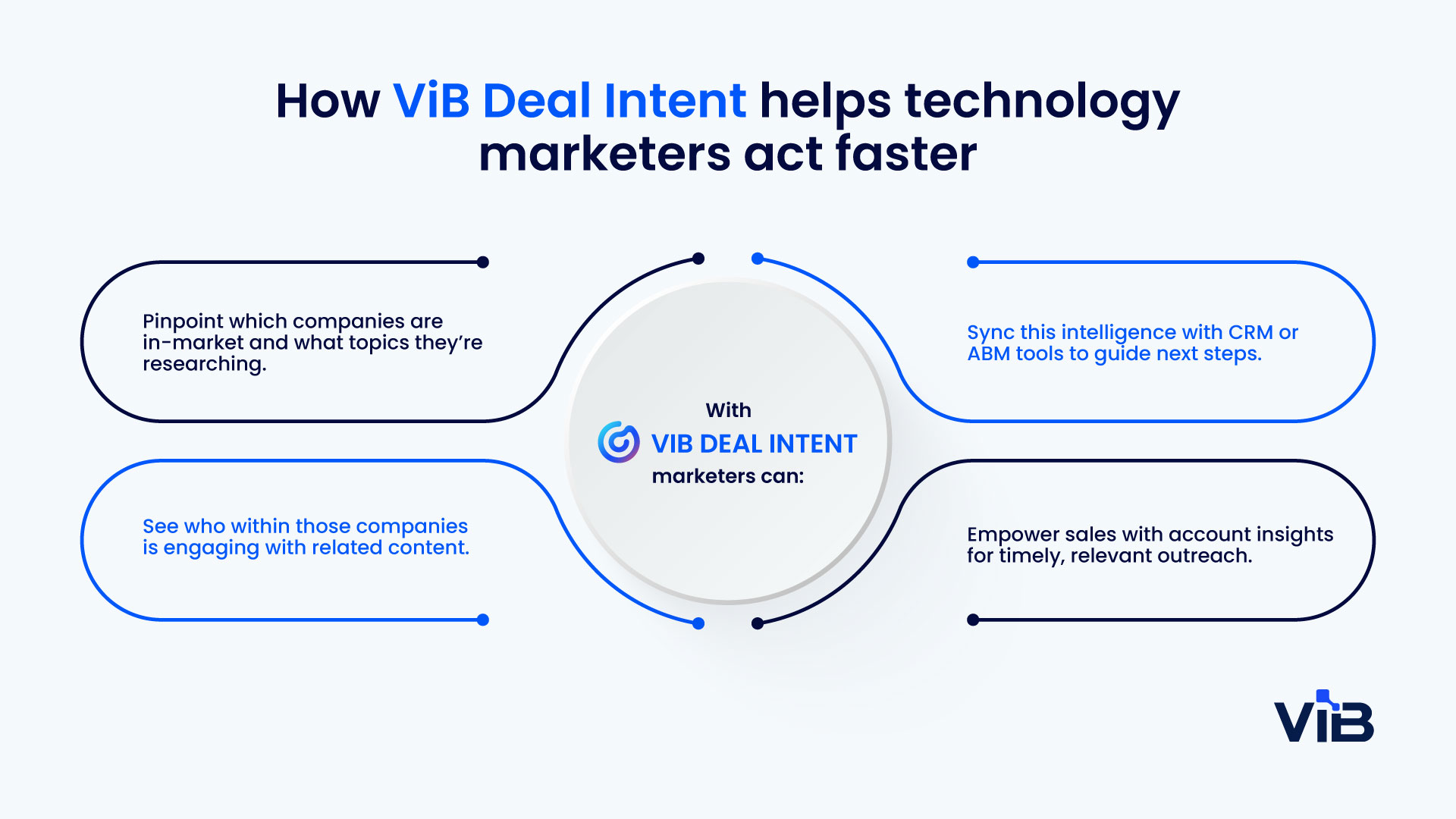
This turns marketing from reactive to evidence-led. Instead of treating every interaction as proof of purchase intent, teams can combine multiple data points and choose the next step based on fit and engagement.
Why precision beats reach in technology marketing
Traditional marketing measures success by how many people see your message. Modern B2B tech marketing measures how many of the right people engage with it. Precision creates efficiency—and that’s where intent data shines.
A well-defined intent strategy helps teams spend time on audiences that match their ICP and demonstrate meaningful engagement. The result is fewer wasted impressions, more relevant campaigns, and a marketing engine that scales without relying on broad assumptions about purchase readiness.
Final thoughts
Technology buyers are more informed than ever. They don’t want broad messaging—they want relevance, timing, and trust. The best marketing strategies for technology companies are the ones that combine insight with execution.
Technology marketers can use fit and engagement signals to prioritize accounts, personalize outreach, and coordinate campaigns across channels. When those signals are interpreted carefully—and combined with useful content and consistent follow-up—each strategy becomes more relevant and measurable.


