 Skip to content


B2B lead generation is a constant challenge for tech companies. The industry’s fast pace, complex buyer journeys, and high competition make attracting and converting leads tricky. However, while generating leads is essential, focusing solely on quantity often wastes time and resources.
Sure, getting a ton of leads might sound exciting, but if they’re not the right fit, they won’t help you grow.
Instead, prioritizing quality over quantity is the key to long-term success. Let’s learn why it matters and how it can transform your business.
Why B2B lead generation is tricky for tech companies
Tech companies face unique challenges when generating leads, including:
- Complex solutions: Many tech products and services are highly specialized. Explaining their value to the right audience takes time and effort.
- Long sales cycles: B2B tech buyers often need months to make decisions, and the process can involve multiple stakeholders along the way.
- Overwhelming competition: Standing out in a crowded market is hard, especially if your strategy focuses on sheer volume over precision.
These obstacles make it essential to shift your focus. Instead of chasing countless leads, prioritize building meaningful connections with prospects who align with your solutions.
Quality over quantity: Why fewer leads work better
More leads don’t always mean more sales. In fact, a flood of unqualified leads can overwhelm your sales team and lower productivity. Instead, generating fewer, high-quality leads can produce better results.
Why does quality matter?
- Higher conversion rates: Leads that align with your ideal customer profile (ICP) are more likely to convert.
- Efficient use of resources: Your team can focus on meaningful conversations rather than chasing uninterested prospects.
- Stronger ROI: Quality leads save time and ensure your marketing efforts pay off.
👍 The types of leads that matter
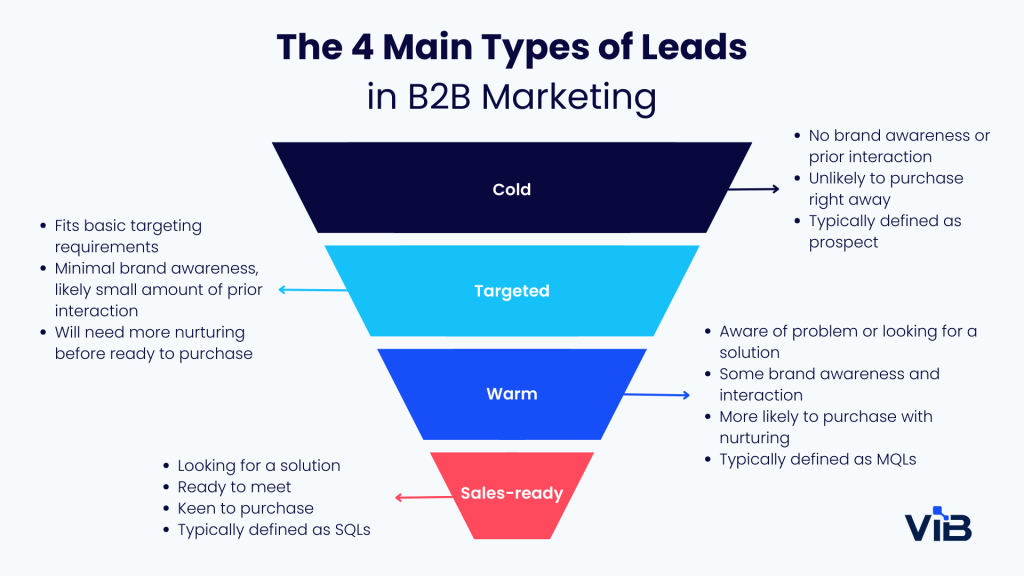
Not all leads are created equal. To improve your strategy, you need to understand the key types of leads—and which ones to focus on:
Marketing qualified leads (MQLs)
These are prospects who’ve shown interest in your offerings by engaging with your content (e.g., downloading whitepapers or attending webinars). While they’re not ready to buy yet, they’re a great starting point for nurturing campaigns.
Sales qualified leads (SQLs)
These leads are further along in the buyer’s journey. They’ve shown intent to purchase and are ready for direct engagement with your sales team.
SQLs are your most valuable leads, as they’re primed for conversion.
Product qualified leads (PQLs)
Common in SaaS businesses, PQLs are prospects who’ve experienced your product (e.g., through a free trial). Their hands-on familiarity with your offering increases the likelihood of conversion.
Cold leads
These are individuals who fit your ICP but have yet to engage with your business. While they’re not as immediately valuable as the other types of leads, strategic demand generation efforts can nurture them over time.
Focusing on SQLs and PQLs—the highest-quality leads—helps ensure your team’s time is spent effectively. With the right tools, such as intent data and predictive analytics, you can identify and prioritize these valuable opportunities.
🌞 Why demand generation outshines traditional lead generation
Traditional lead generation methods like cold calls and pushy pitches focus on sales leads—and often fall short. Demand generation, on the other hand, takes a strategic and long-term approach.
What’s the difference?
- Sales leads: Focus on volume, often resulting in lower-quality prospects.
- Demand generation services: Focus on creating awareness and interest among the right audience, leading to higher-quality opportunities.
Here’s why demand generation works better:
- Holistic strategy: It covers the entire buyer journey, from awareness to decision-making.
- Stronger engagement: Focused efforts create deeper connections with prospects, making them more likely to trust your brand.
- Higher-quality interactions: Demand generation strategies ensure you meet decision-makers who are ready to explore your solution.
By shifting your focus from sales leads to demand generation, you invest in sustainable growth. ViB’s proven methods help you generate awareness, build interest, and secure meaningful conversations.
For instance, ViB’s appointment-setting service changes the game, offering guaranteed meetings with demo-ready leads genuinely interested in your solutions.
How Appointment Setting Works
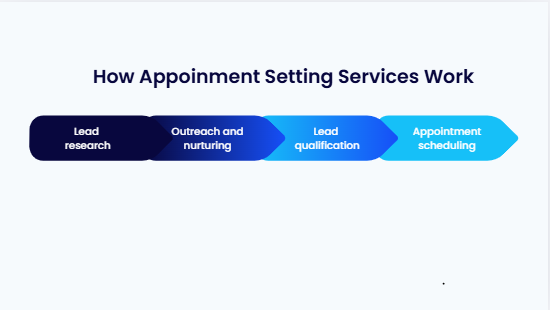
Here’s how it works and why it’s the smarter choice:
- High-quality connections: With ViB, prospects voluntarily request to meet after learning how your solution solves their challenges. No hard sells, just meaningful interest.
- Targeted outreach: Reach your ideal customers by targeting specific job titles, industries, company sizes, geographies, and more.
- Proven results: Over 40% of appointments convert into real opportunities, making every meeting worth your time.
- Risk-free pricing: You pay only for successful meetings held, ensuring cost efficiency and eliminating wasted budgets.
- Cost savings: ViB’s rates are twice as competitive as standard providers, with optional expanded targeting at half the cost of focused appointments.
How to choose the right B2B lead generation agency: A 7-step guide
Selecting the right lead generation partner can make or break your marketing success. To ensure you’re partnering with a reliable and effective agency, focus on these key areas:
- Lead sourcing: High-quality leads come from nurturing engaged networks, not scraping or cold calling. Agencies like ViB prioritize warm, vetted leads.
- Industry expertise: Choose an agency experienced in your sector. For tech and SaaS, ViB’s vast network of tech contacts is a major advantage.
- Tailored strategies: Ensure the agency designs campaigns aligned with your goals and fills your sales pipeline with qualified opportunities.
- Lead qualification: Look for clear processes that ensure leads meet your criteria, saving your sales team time.
- Proven success: Review case studies and testimonials to confirm the provider’s track record in your industry.
- Transparent metrics: The best agencies provide clear reporting on performance and ROI.
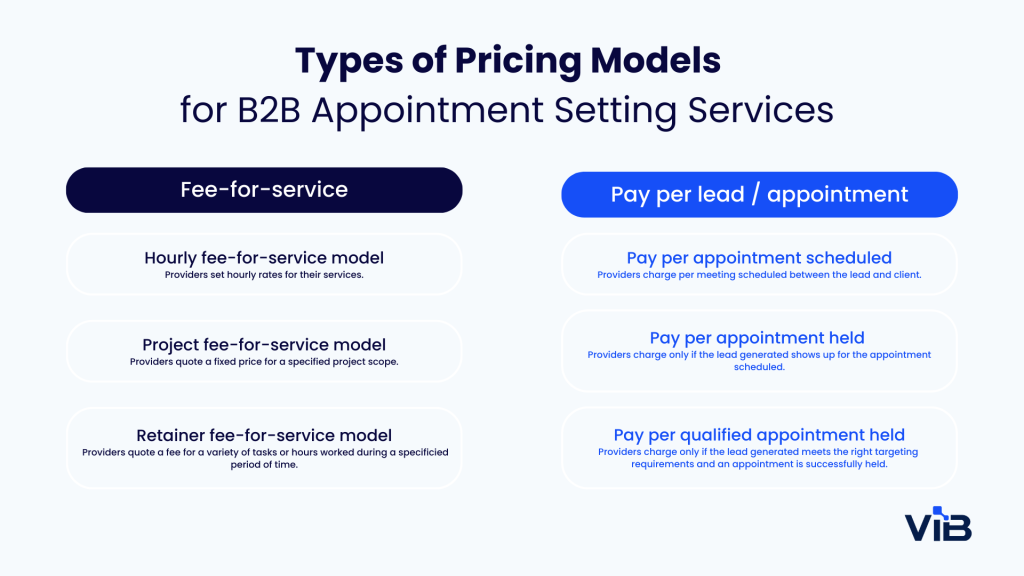
- Pricing: Consider pay-per-lead models to minimize risk and maximize ROI.
Choose a partner like ViB to build targeted, results-driven campaigns with high-quality leads.
🏆 Why quality leads win
Tech companies can no longer afford to chase every lead. Prioritize quality over quantity to increase conversions, save time, and boost ROI.
ViB’s demand generation services take this approach to the next level. From appointment-setting to strategic insights, ViB helps tech companies generate demand, not just leads.
Ready to transform your lead generation strategy? Explore ViB’s demand generation services today and see how appointment-setting can make a difference.
Schedule a consultation now to learn how ViB can help your team connect with high-quality prospects.


