 Skip to content


B2B events can be a lead generation goldmine—but only if you’re engaging the right people. The reality is that not everyone who walks past your booth is worth your time.
When your goal is generating and converting real leads, not just presence, it’s critical to know how to identify decision-makers at events who fit your ideal customer profile (ICP)—so you can focus your energy where it counts.
Let’s break down how top-performing marketers do it.👇
Why identifying decision-makers matters
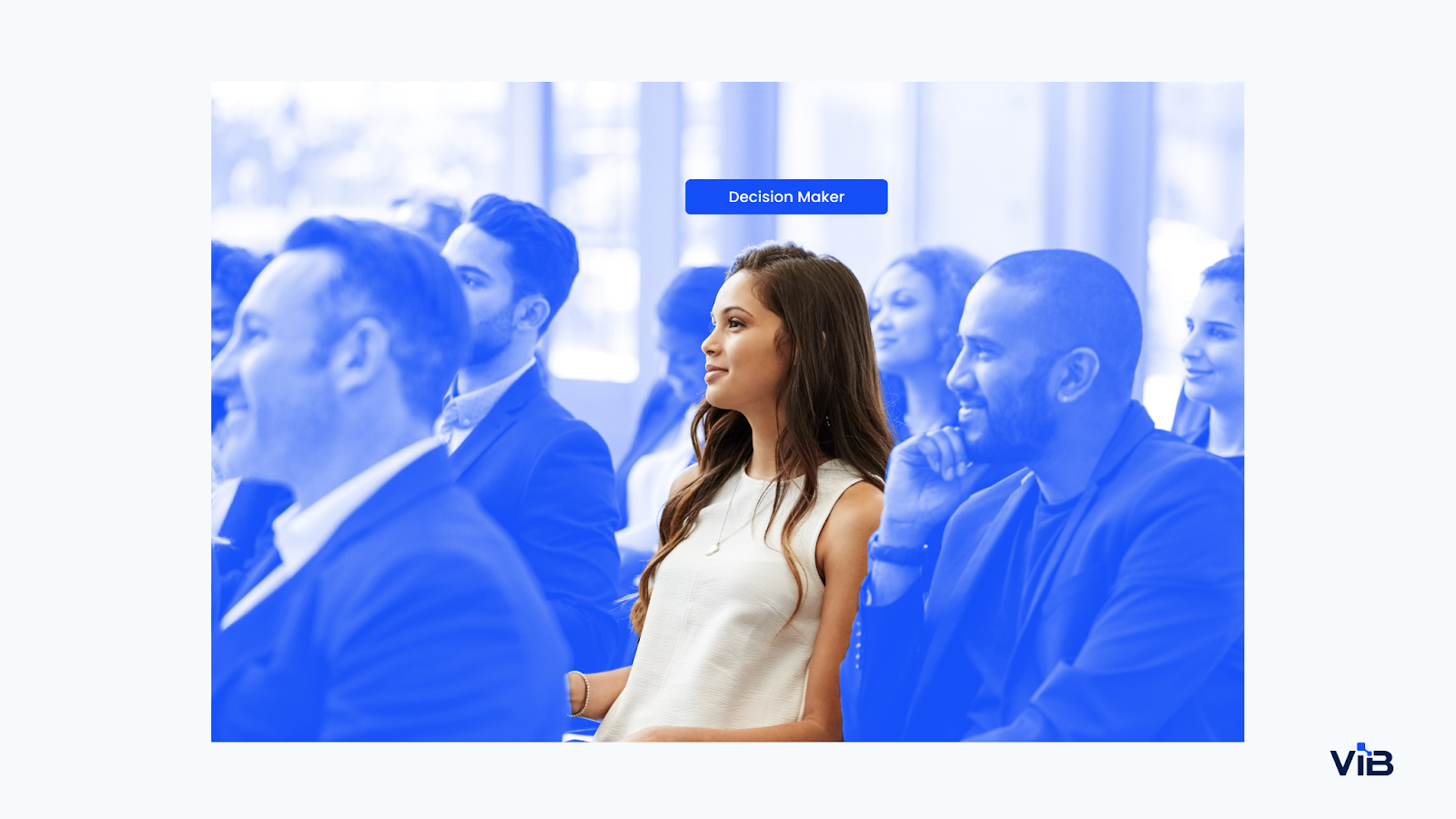
Anyone can scan a badge or collect business cards. But if you’re not talking to actual decision-makers—people who influence or control the buying process—within your ICP, you’re just spinning your wheels.
Identifying the right contacts helps you:
- Prioritize leads with the highest revenue potential
- Have more relevant and strategic conversations
- Maximize your ROI from expensive event investments
And if you’re in a competitive tech space, those advantages can be the difference between a warm lead and a wasted opportunity.
What qualifies as a decision-maker?
While 81% of attendees at B2B events possess buying authority, not all of those decision-makers are actually looking for your products. Before you can identify decision-makers within your ICP, you need to define them. Make sure you have a clear ideal customer profile fleshed out. From there, you can consider which job titles you want to target. Depending on your solution, this might include:
- C-level executives (CIO, CTO, CMO, etc.)
- VPs or directors of departments like IT, ops, or engineering
- Influencers or key contributors with budget influence
💡 Pro tip: Think in terms of buying committees. Decision-makers don’t always sign the checks, but they do drive buying decisions.
6 smart tips for how to identify decision-makers at events
Here’s how top B2B marketers get it done:
1. Use pre-event intent data
Start identifying decision-makers before the event even begins. Look at:
- Who’s been engaging with your content online
- What topics they’re researching
- If their company matches your ICP
Partnering with a B2B demand generation provider can help you uncover high-intent contacts using targeted campaigns, intent data, and industry-specific audience insights.
2. Geofence the event to track behavior

Geofencing allows you to digitally “fence” the venue and track who enters the designated area. If someone from your target account engages with your ads during the show, that’s a strong intent signal.
Even if they never stop by your booth, you’ll have a way to follow up—especially if your platform includes identity resolution.
📍 With the right engagement tracking and enrichment strategy, marketers can connect anonymous activity back to real companies and prioritize more relevant follow-up.
3. Prioritize badge titles—but with context
Badge scanning is easy, but it’s not enough. When someone’s badge says “Manager,” don’t dismiss them—titles can vary widely between companies.
Instead, cross-reference their:
- Company size
- Industry relevance
- Job function and historical buying patterns
You can also enrich contact data post-event to fill in gaps—like organization charts, budget authority, and past buying activity.
4. Lean on booth staff to qualify in real time
Train your booth team to ask subtle qualifying questions like:
- “What’s your role in the decision-making process?”
- “Who else on your team is exploring this solution?”
This keeps the tone conversational but gives you insight into who holds the power.
5. Use mobile retargeting and form gates
Running gated content (like a giveaway or in-depth asset) through a mobile retargeting campaign can be a strong filter.
Decision-makers are more likely to engage with premium, useful content in order to help inform their buying choices. You can use those touchpoints to identify who’s serious and who’s just window shopping.
6. Follow up with enriched contact data
After the show, don’t settle for a generic “thanks for stopping by” email. Instead:
- Enrich contact data using firmographics and technographics
- Segment leads based on decision-making role
- Send tailored follow-ups based on buyer stage
This post-event step is where a lot of companies drop the ball—and where you can stand out.
How smarter demand generation helps you identify decision-makers at events
A smarter B2B demand generation strategy can help you pinpoint your ideal buyers before, during, and after an event. The right approach combines:
- Intent-based audience targeting
- Content engagement signals
- Account and contact enrichment
- Campaign performance tracking
- Personalized follow-up opportunities
You don’t just get impressions—you get names, titles, and companies, so you can act on insights that drive real results.
Final takeaways 🎯
Identifying decision-makers at events doesn’t have to feel like a guessing game. The right mix of data, targeting, and tech can help you:
- Focus on the people who actually matter
- Stop wasting time on the wrong conversations
- Turn your event budget into revenue
If you’re heading to an event soon, don’t just show up. Show up smarter—with a plan to find, engage, and convert real decision-makers.
Want to identify better-fit decision-makers and turn event engagement into qualified B2B demand? Explore ViB’s B2B demand generation solutions.


