Skip to content


B2B trade shows and events are powerful opportunities to connect with your ideal buyers—but only if you can get their attention in the first place. Traditional event promotion often casts a wide net, wasting budget on audiences who aren’t even attending.
That’s where geotargeting B2B events comes in.
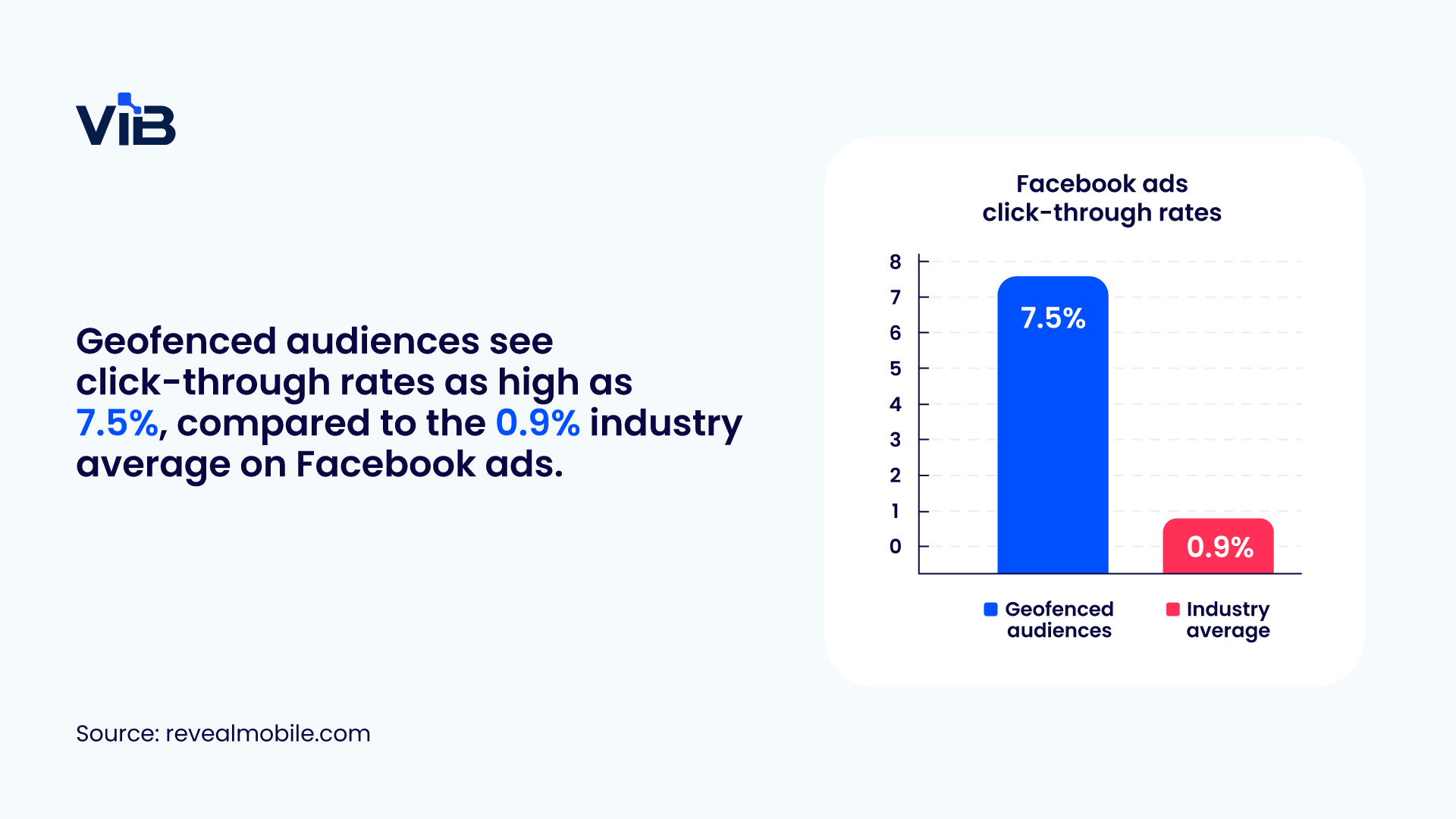
By reaching professionals who are in the right place at the right time—whether that’s the convention center, nearby hotels, or even the host city weeks in advance—you can ensure your message lands exactly where it matters. Instead of hoping the right people stumble across your booth, you’re strategically positioning your brand in front of them throughout the event journey.In fact, Reveal Mobile found that geofenced audiences see click-through rates as high as 7.5%, compared to the 0.9% industry average on Facebook ads.
In this blog, I’ll explain how geotargeting works, provide actionable tips to implement your own geotargeting campaign, and share key metrics to measure success.
Why geotargeting B2B events matters
Geotargeting isn’t just for B2C retail brands trying to pull in local foot traffic. For B2B marketers, it can be a game-changer at trade shows and other industry events. Here’s why:
- Precision: Ads reach attendees who are physically close to the event venue or within key regions.
- Efficiency: You spend less on wasted impressions outside your target area.
- Relevance: Messaging feels timely and contextual (“Join us just down the street at Booth 214!”).
- Engagement: Attendees are more likely to notice you when your ads are hyper-relevant to their location.
When executed well, geotargeting ensures you’re not just showing up—you’re showing up in front of the right people.
Practical geotargeting tactics for B2B events
So how do you actually start geotargeting B2B events? Here are some tried-and-true tactics:
1. Build pre-event awareness
Start targeting prospects weeks before the show. You can run campaigns in the host city or in nearby regions where you know your ideal customer profile (ICP) is concentrated. This way, you create awareness among attendees before they ever walk into the expo hall.
2. Capture attention during the event
This is where geotargeting really shines. You can fence off the convention center, hotels, after-hours hangouts, and even competitors’ booths. When attendees check their phones, scroll LinkedIn, or browse industry sites, they’ll see your ads. A timely reminder like “Drop by Booth 214 for a live demo!” can make all the difference.
3. Retarget after the show
The event doesn’t end when the booths close. By layering in post-event retargeting, you can keep your brand top of mind for attendees who engaged with your ads or visited the venue. This ensures your event spend carries longer-term impact.
Ad formats that work best with geotargeting
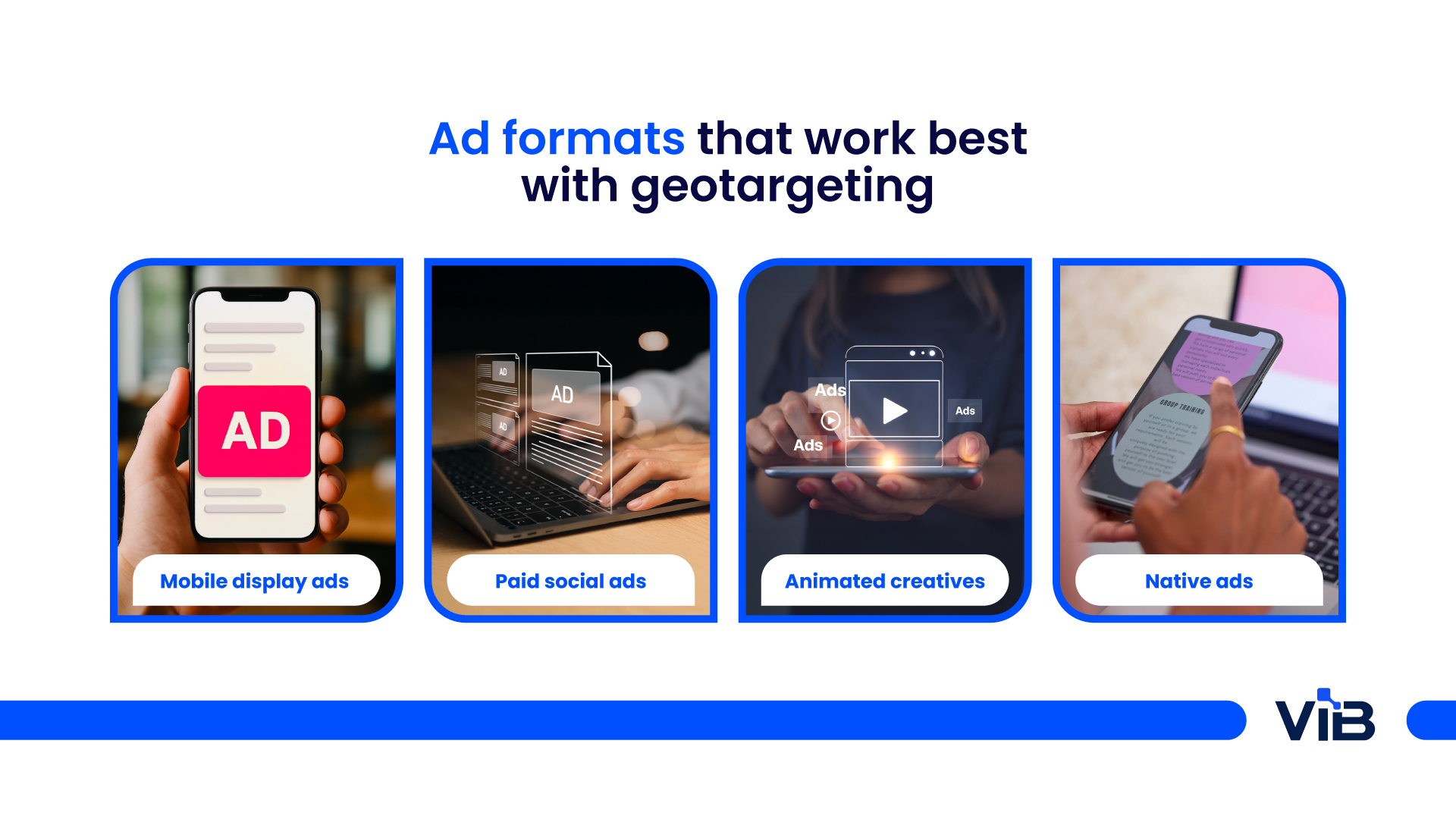
Not every ad style will grab attention at events. You want formats that are quick to digest and visually eye-catching. Here are some examples:
- Mobile display ads — These are perfect for geofencing since attendees are likely to be glued to their phones.
- Paid social ads — LinkedIn and Meta allow precise geographic filters that pair well with professional targeting.
- Animated creatives — GIFs, HTML5 banners, and short video ads help you stand out in a crowded feed.
- Native ads — blend seamlessly into content attendees are already reading.
💡 Pro tip: Pair your creative with location-specific messaging. A simple “Happening right here in Boston” or “Stop by Booth #214 today” makes the ad feel instantly relevant.
How to measure geotargeting success
It’s one thing to run event campaigns, but you also need to prove ROI. Here are some smart ways to measure impact:
- Registrations and sign-ups: Track how many form fills came from geo-targeted ads.
- Booth traffic: Use QR codes or custom landing pages tied to your ads.
- Lead quality: Evaluate whether geo-driven leads fit your ICP and convert to meetings.
- Engagement metrics: CTR, conversions, and impression-to-visit ratios within your geofenced zones.
- Enriched lists: Did you walk away with a stronger, more qualified contact database?
By tying results back to location-based campaigns, you can prove that geotargeting B2B events directly contributed to event ROI.
Leveling up: Combining geotargeting with data
Geotargeting is powerful on its own, but the real magic happens when you layer it with other data sources.
For instance, ICP targeting lets you focus on your ideal job titles, industries, or company sizes. Intent data, meanwhile, lets you zero in on professionals already researching your category or competitors. And identity resolution data allows you to match anonymous visitors and event interactions to real contacts.
This combination ensures your ads reach not just anyone nearby—but the decision-makers most likely to buy. 🚀
Where ViB Digital for Tradeshows fits in
Executing your own geotargeting campaign well is easier said than done. You need the right tools, data, and strategy. That’s where ViB Digital for Tradeshows comes in.
We help B2B marketers create buzz before, during, and after events with a full suite of digital tactics. Using geotargeting, ICP targeting, and intent data to put your brand in front of the right audience—not just a random crowd.
We provide multi-format ad options (static, GIFs, HTML5, native, video) so your creative doesn’t get lost in the noise. And with enriched contact lists and advanced tracking pixels, you’re not just promoting an event—you’re building long-lasting connections.
But here’s the best part: You don’t even need a booth to run a successful campaign. Whether you’re exhibiting or just attending, you can still build visibility and drive meetings.
In short, ViB Digital for Tradeshows takes the guesswork out of geotargeting B2B events, giving you precision targeting and measurable ROI.
The bottom line
Geotargeting is a must-have for B2B event marketing in 2025. It ensures you spend less on wasted impressions and more on the right prospects. And combining geotargeting with intent data and ICP targeting maximizes event ROI.
ViB Digital for Tradeshows makes it easy to execute geotargeting campaigns that actually drive results.