 Skip to content

B2B marketers like us constantly strive for increased exposure to our carefully crafted content. Yet, more often than not, generating leads through content poses a common challenge for many B2B marketers. Fortunately, there is a remedy – the content syndication model.
The content syndication model is a cost-effective way to reach new audiences. It’s also a great way to build brand awareness and boost your search engine ranking – all at once.
Keep reading, or you can also check our Bruce’s video if you’re ready to hear about the best B2B content syndication sites!
What is content syndication?
Content syndication is a digital marketing strategy where you share your existing content (whitepapers, ebooks, research reports, etc.) on content syndication platforms or third-party websites.
Content syndication helps you to:
- Boost brand awareness: Spread your brand name and message to a whole new group of potential customers.
- Capture interest: See who’s checking out your content online. This “intent data” helps you understand what people are curious about.
- Generate leads: Turn interested viewers into potential customers by offering valuable content (like ebooks) in exchange for contact information.
Bonus! Content syndication often works hand-in-hand with ABM (Account-Based Marketing). This means targeting specific companies you want to do business with, using perfectly tailored content.
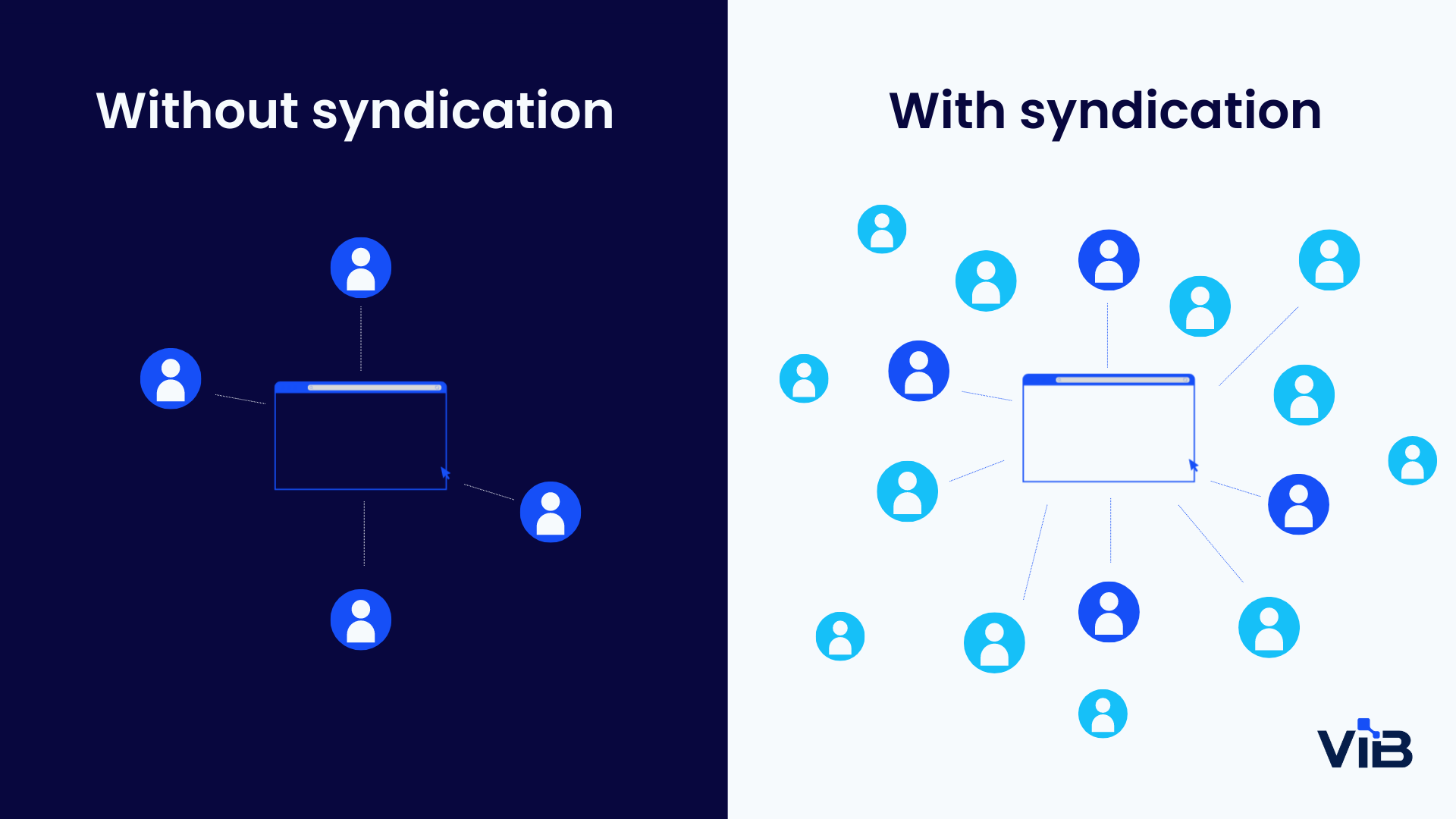
How does the content syndication model work?
The right B2B content syndication model can help you connect with your ideal clients.
The first step is figuring out who that perfect client is. You then choose a service that puts your content on websites that these people use.
Sharing your best content, like articles, reports, or whitepapers, is key. The service provider can then take over. They would promote your content through targeted emails or messages directly to your ideal clients.
The best part? You only get contact information from people who fit your ideal customer profile. Those are the ones who downloaded your content because it fits their needs.
This way, you focus on qualified leads with real potential.
A detailed overview of the content syndication model
A well-planned content syndication strategy is your secret weapon for marketing success. Let’s break it down into simple steps to ensure a smooth journey.
1. Define your goals
What’s your direction? Do you want more people to know about your brand? Are you looking to generate high-quality leads (MQLs) that are ready to talk to your sales team?
Clearly define your goals, whether it’s impressions or leads, for content syndication.
2. Know your resources
Be real about the resources you have. Check your budget for the campaign and whether your team has enough time to manage it.
3. Identify your real audience
Who are you trying to reach? Create detailed buyer personas to understand your ideal target audience.
These profiles will help you identify the clients you want. Think about their demographics, firmographics, interests, and pain points.
4. Choose the right syndication partners
Choose syndication partners who attract your ideal audience and have a track record of reaching marketing goals. Look for platforms with engaged professionals actively seeking solutions, like ViB.
5. Pack engaging content
Create content your audience loves ♥️! Whether it’s whitepapers, ebooks, industry reports, or even recorded webinars – tailor them to your target audience.
Inform, engage, and include a clear call to action (CTA) to guide them next.
Focus on your highest-performing content throughout the sales funnel to provide value at every stage of their buying journey.
6. Initiate outbound campaigns
Once your content is ready, your chosen syndication service provider takes the wheel.
Here, let’s assume you’re opting to get downloads and leads from your content.
And so your provider will leverage their expertise to launch targeted outbound campaigns that promote your content download page to your ideal customer profile.
7. Generate high-quality leads
When these new audiences download your content, you’ll get leads.
A quick tip here is to opt for a pay-per-lead model. This way, you’ll only get contact information from people who fit your ideal customer profile. This guarantees you only get the highest quality leads – those who are actively seeking the solutions you offer.
8. Track your progress
It is important to partner with a syndication platform that provides insightful data. Track metrics like engagement rates, content downloads, and lead-to-opportunity conversion rates.
9. Analyze and adapt
Use this data to identify areas for improvement. Understand how your audience engages with your content and keep an eye on your social media mentions.
Check your results regularly and adjust your approach as needed. Remember, when it comes to content syndication, experimentation is key!
10. Nurture your network
Once you’ve identified valuable leads, nurture your network with these trusted syndication partners. This collaboration can fuel even greater success in the future.
High-quality content, targeted leads, and a network built on trust and collaboration – these are the ingredients for explosive marketing growth!
Start content syndication today with ViB Syndication and watch your business reach new heights.

Examples of the content syndication model in action
Before you choose a content syndication partner, dig a little deeper. A reputable firm will be happy to showcase its track record with a variety of real-world content syndication case studies.
Content syndication example 1: Google (formerly Siemplify)
Google, formerly known as Siemplify, sought out vendors for content syndication. However, most vendors weren’t able to meet its expectations.
Among the 15 content syndication vendors it tried, only ViB Tech exceeded expectations and kept improving.
Through ViB Syndication, Google achieved four times the pipeline compared to previous providers.
Google also tried ViB Appointments, a B2B appointment setting service, and the results were nothing short of excellent!
Out of ten appointments, eight led to meetings and six to opportunities.

Get the full scope of Google’s success here!
Content syndication example 2: Abnormal Security
Another example of content syndication is with Abnormal Security. They provide cloud-based email security for top executives, which is quite a difficult market to reach.
With ViB Content Syndication, Abnormal gets around 1,000 to 1,500 leads every three months. These leads are good and result in many opportunities, bringing in over $800,000 each month.
Compared to other services, Abnormal found that ViB gives them better leads that are more likely to turn into sales. Their sales teams also like it because they consistently get positive feedback.

Read the full success story here!
What are some popular services, software, and vendors specializing in content syndication?
Ready to put your content to work? Let’s explore content syndication services, software, and vendors.
Popular content syndication software
Syndication softwares are tools or platforms that allow you to manage and automate the content syndication processes.
Content syndication software often includes features such as content scheduling, distribution to multiple channels, analytics tracking, and sometimes integration with customer relationship management (CRM) systems.
Businesses use content syndication software to optimize their content distribution efforts. These tools also allow them to track the performance of syndicated content across various channels.
Some popular content syndication software includes:
- Hootsuite
- Buffer
- Sprout Social
Popular content syndication sites
This is an umbrella term for networks, services, and platforms that specialize in distributing content to third-party websites or targeted communities.
In some cases, they may also create content for you.
Examples of popular content syndication services are
- Outbrain
- Taboola
- LinkedIn Marketing
Popular content syndication vendors
Content syndication vendors offer a human-powered approach to content syndication. These platforms offer more targeted distribution and higher-quality content placement.
An example of a content syndication service is ViB Syndication, which focuses on tech-savvy audiences.
They have a huge online community where people can choose to download your content. Plus, you only pay when someone shows genuine interest (downloads your content) – a win-win!

Discover everything you need to know about ViB Syndication, including how it works, the challenges it solves, and its success stories, through our comprehensive video walkthrough.
Get qualified leads, not just traffic, with ViB Syndication
ViB is a demand-generation marketing agency with one clear goal: connect you with pre-qualified leads ready to make buying decisions.
Our secret weapon? A thriving community of highly-targeted millions of vetted tech leaders.
Simply provide your solutions. We’ll show them to the exact people in the tech industry who are looking to solve problems like yours.
See the ViB difference with a trial
Forget about chasing website traffic with questionable demographics.
With ViB, you get qualified leads – tech leaders ready to engage and make buying decisions.
That’s the power of content syndication done right.
Check out our exclusive ViB content syndication trial here!

Need a more assured B2B content syndication solution to reach your tech audience?
Test drive our unique community-based approach to syndication with a discounted first-timer’s trial today — 100 downloads guaranteed.


