 Skip to content


If email marketing still sits at the center of your B2B demand strategy, your list quality is doing more work than your copy ever will.
Most performance issues tied to email campaigns are not messaging problems. They are list problems. Who you are emailing, when you reach them, and why they should care matters more in 2026 than it did even a few years ago.
This guide breaks down how experienced B2B marketers should think about email marketing B2B lists today. We’ll cover what has changed, where teams go wrong, and how to build lists that support real outcomes, not just activity.
Why are email marketing B2B lists underperforming right now?
Many teams are sending more emails than ever and seeing less return.
Inbox competition is higher. Buyer patience is lower. And relevance expectations are sharper. If your list strategy has not evolved, performance will stall no matter how polished your campaigns look.
The most common issues are structural, not tactical. Lists are outdated, poorly segmented, or built around volume instead of intent. That combination leads to low engagement and declining deliverability over time.
What actually defines a high quality B2B email list?
A high quality list is not defined by size.
It is defined by relevance, timing, and permission. The best lists consistently reach people who match your ICP, sit close to the buying decision, and expect to hear from you.
That requires more than a one-time list build. It requires continuous validation.
1) Why does list relevance matter more than list growth?
Growing your list feels productive, but relevance drives results.
In B2B, people change roles frequently. A contact who once fit your ICP may now sit in a different function or company. Even when contacts still match your ICP, many are not in an active buying or research phase.
If your list does not account for role changes and buying timing, your emails become noise. That hurts engagement and brand trust.
2) What role does intent play in modern B2B email lists?
Intent has shifted from a nice-to-have to a core signal.
Knowing who fits your ICP is no longer enough. You also need to understand who is showing interest, researching similar solutions, or engaging with related content.
Intent does not need to be perfect to be useful. Even directional signals help prioritize who should receive which message and when.
How should experienced teams think about inactive contacts?
Removing inactive contacts protects inbox placement and improves engagement, but list quality goes deeper than activity alone.
Strong teams monitor engagement signals and use them to filter, segment, and adjust cadence. Low engagement does not always mean removal. Sometimes it means repositioning contacts into lower frequency or educational tracks.
The goal is not to send fewer emails blindly. It is to send relevant emails to people who are receptive.
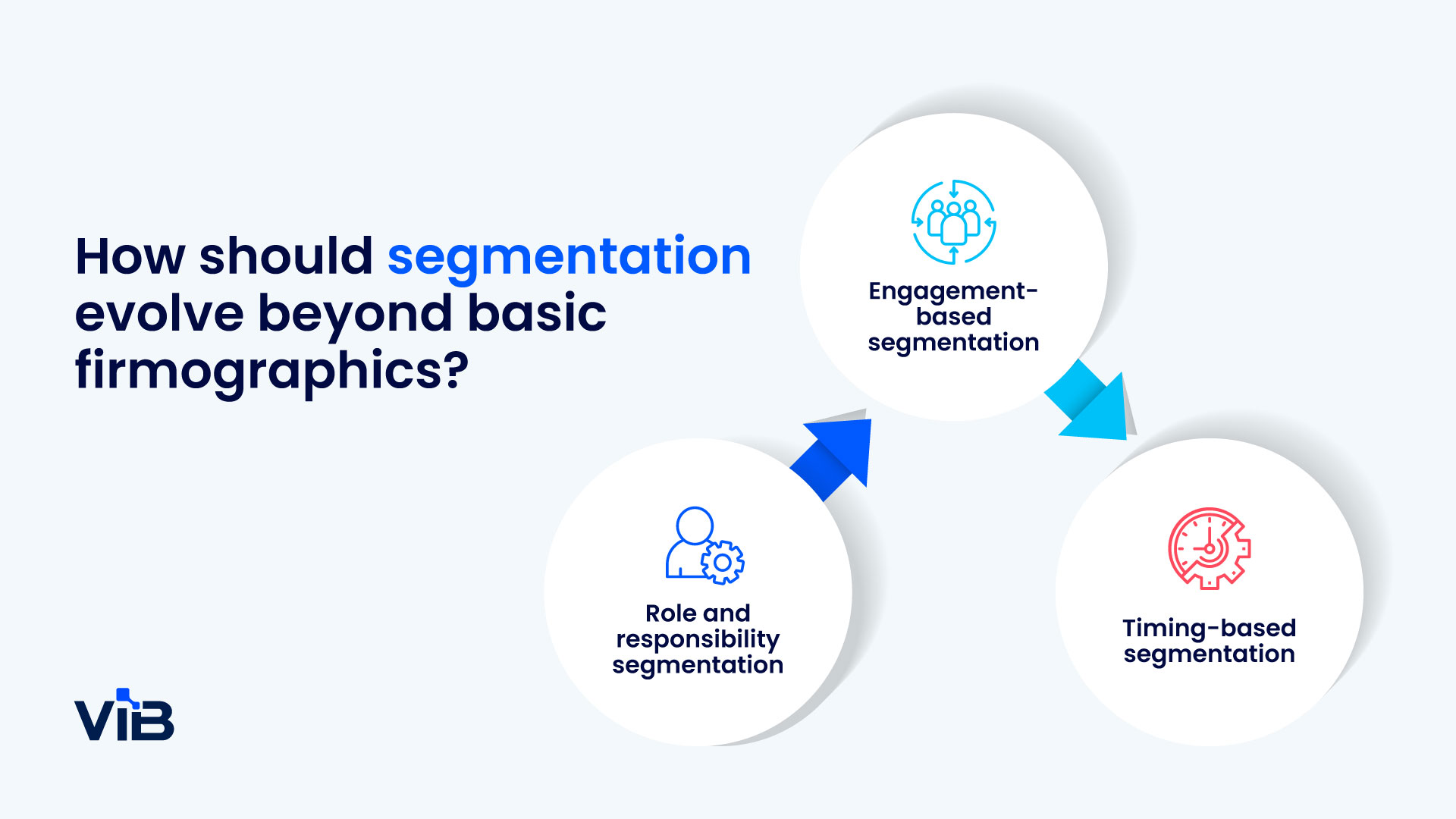
How should segmentation evolve beyond basic firmographics?
Basic segmentation is table stakes. Advanced segmentation is where performance improves.
1) Role and responsibility segmentation
Different roles care about different outcomes. Segmenting by title alone is not enough. Segment by responsibility and influence within the buying group.
2) Engagement-based segmentation
Past behavior tells you how to communicate. Someone who clicked on a pricing page should not receive the same message as someone who downloaded a top-of-funnel guide.
3) Timing-based segmentation
Buying windows matter. Segmenting by recency of engagement helps avoid sending high-intent messages to cold contacts.
Are purchased lists ever a good idea?
Traditional purchased lists rarely perform well long term.
They age quickly, lack engagement signals, and often damage sender reputation. Even when they meet ICP criteria, they usually lack buying context.
That does not mean external reach is impossible. It means the method matters.
How leading teams expand reach without hurting deliverability
High-performing teams separate list ownership from list access.
Instead of importing large third-party lists into their own systems, they leverage channels that allow targeted email outreach without inheriting deliverability risk.
This approach preserves brand reputation while still expanding reach beyond owned databases.
What should you be measuring to evaluate list performance?
Open rates alone are no longer enough.
Advanced teams track:
- Engagement trends by segment – How different roles, industries, and account tiers respond over time. This helps you spot which segments are gaining momentum and which are going cold.
- Conversion into meaningful action – Movement beyond clicks, such as event registrations, content downloads, meeting requests, or replies that signal real buying interest.
- List decay and refresh rates – How quickly contacts go inactive, bounce, or unsubscribe, and how often new, qualified contacts are added to keep the list healthy.
These metrics reveal whether your list strategy is improving or quietly eroding.

Where do most teams hit a ceiling with their lists?
The ceiling usually appears when internal lists stop growing or stop responding.
At that point, teams either over-email the same contacts or experiment with low-quality list sources. Both paths create diminishing returns.
The more sustainable option is extending reach without sacrificing quality.
How does ViB Emails support smarter B2B email list strategy?
Once list fundamentals are in place, the next challenge is scale.
ViB Emails is designed to help B2B tech marketers reach relevant, opted-in audiences without the operational and deliverability risks of traditional list acquisition.
Instead of managing new lists internally, teams can use ViB Emails to:
- Reach B2B professionals who have opted in to receive relevant content
- Target by role, industry, and seniority
- Maintain deliverability without warming new domains
- Layer email outreach into existing demand programs
ViB Emails works best as an extension of a strong list strategy, not a replacement. It supports the same principles discussed throughout this guide, relevance, timing, and permission, applied at greater scale.
For teams hitting limits with owned lists, it becomes a practical way to expand reach while protecting performance. 📬
What should you take away from email marketing B2B lists in 2026?
Email performance is not about sending more. It is about sending smarter.
High-performing B2B teams invest in list quality, segmentation, and timing before optimizing copy or design. They treat lists as living assets, not static databases.
When that foundation is in place, tools like ViB Emails become natural accelerators rather than band-aid solutions.
If your email campaigns feel stalled, the answer is rarely another subject line test. It is almost always a list question. 🎯


