 Skip to content


B2B demand generation vs lead generation is a distinction many teams gloss over, often treating demand generation as simply a more modern version of lead generation. In reality, the two serve different purposes, and confusing demand generation vs lead generation is one of the main reasons B2B marketing programs struggle to build real momentum.
Lead generation captures contact information at a moment in time. Demand generation shapes buyer readiness across an account over time. When teams optimize only for leads, they often create activity without building real buying intent.
This article breaks down what B2B demand generation actually is, how it differs from lead generation, and how experienced teams build demand that results in meaningful conversations, not just names in a database.
What is B2B demand generation?
B2B demand generation is the practice of building awareness, relevance, and intent before buyers are ready to engage with sales. It functions as a system, not a campaign, supporting buyers as they learn, evaluate options, and align internally.
Most buyers research long before they raise their hand. Demand generation exists to influence preference during that invisible phase, so engagement feels timely and useful when it finally happens.
What is lead generation, and where does it fall short?
Lead generation is designed to capture identifiable contacts, usually through gated content, event registrations, or demo requests. It works well when buying cycles are short and decisions are made by individuals.
In complex B2B environments, those conditions rarely exist.
A single form fill provides little insight into urgency, intent, or internal alignment. That limitation becomes a problem when lead generation is treated as the primary strategy instead of a downstream tactic.
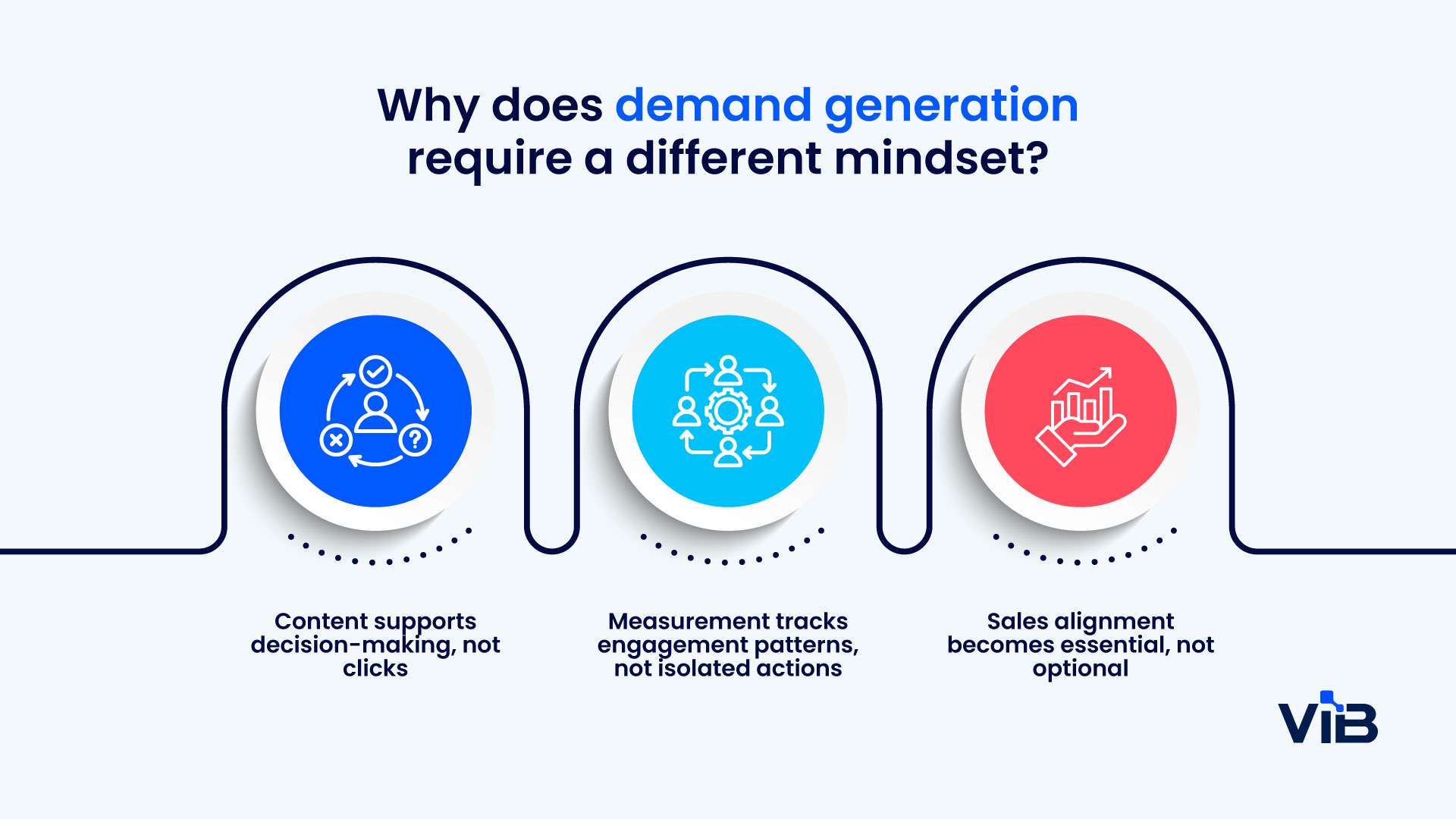
Why does demand generation require a different mindset?
Demand generation starts from the assumption that buyers move on their own timeline. Instead of asking how to generate more leads this quarter, it asks how to help the right accounts become more prepared to buy.
This shift changes how teams operate:
- Content supports decision-making, not clicks
- Measurement tracks engagement patterns, not isolated actions
- Sales alignment becomes essential, not optional
Demand generation rewards patience and consistency, which is why it often feels harder to execute than lead generation.
How do demand generation and lead generation work together?
Demand generation and lead generation are not opposing strategies. They function best as connected layers of the same system.
Demand generation builds interest and intent across accounts. Lead generation captures signals once that intent reaches a meaningful threshold. When teams skip demand and jump straight to capture, lead generation becomes expensive and inefficient.
High-performing teams treat lead generation as a conversion mechanism, not the foundation.
Why do most B2B demand generation strategies fail?
Most demand generation strategies do not fail because teams lack effort. They fail because the strategy never becomes a cohesive system that connects activities over time.
When content, ads, events, and outreach operate independently, engagement never compounds. Each initiative starts from zero, forcing teams to manufacture urgency instead of responding to real buyer interest.
The issue is not execution.
It is structure.
What does an effective demand generation system include?
Effective demand generation systems are designed around progression rather than funnels. They reflect how buyers actually move from awareness to readiness, often in non-linear ways.
At a high level, these systems rely on three components that reinforce one another:
- Consistent buyer education
- Visibility into intent and engagement patterns
- Timely, behavior-driven outreach
Missing any one of these weakens the entire system.
1) Consistent buyer education
Demand generation begins by helping buyers make sense of their problem space. This includes content that reframes challenges, introduces new considerations, and supports internal conversations.
The focus is clarity and relevance, not persuasion.
2) Visibility into buyer intent
Interest becomes demand when engagement shows direction and momentum. That requires understanding what accounts consume, how often they engage, and which topics recur over time.
Single-touch metrics rarely provide this context. Without intent visibility, teams rely on assumptions that misrepresent readiness.
3) Timely and relevant engagement
Engagement works best when it reflects demonstrated behavior rather than arbitrary thresholds. Outreach aligned to buyer readiness feels useful instead of disruptive.
This moment is where demand generation either becomes operational or breaks down entirely.
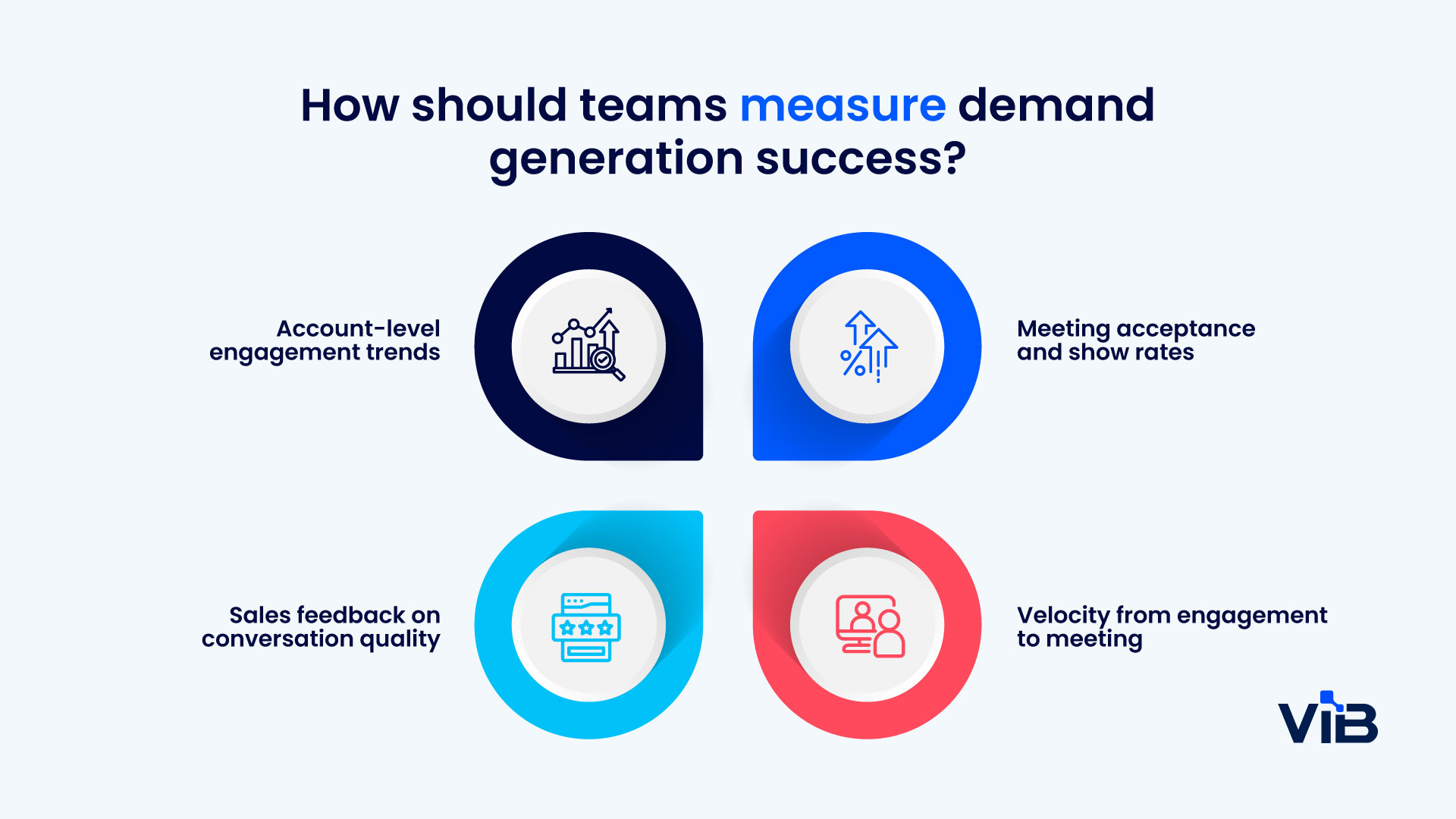
How should teams measure demand generation success?
Demand generation success cannot be measured by lead volume alone. Advanced teams look for signals that reflect readiness and progression.
Common indicators include:
- Account-level engagement trends
- Meeting acceptance and show rates
- Sales feedback on conversation quality
- Velocity from engagement to meeting
The goal is fewer, better conversations, not more contacts.
How does demand generation turn engagement into real outcomes?
Demand generation only works when early engagement translates into momentum, clarity, and action. The challenge is not creating interest, but knowing how to guide that interest forward without forcing conversion too early.
This is where many teams struggle. Without a clear progression from education to insight to interaction, demand stays fragmented and difficult to operationalize.
Below are the core mechanisms that help demand generation move from awareness to meaningful engagement.
How content syndication supports demand generation
Content syndication supports demand generation by proactively placing educational content in front of relevant B2B audiences, instead of waiting for buyers to find it on their own.
When done well, it helps teams:
- Reach opted-in professionals by role, industry, and topic interest
- Introduce ideas earlier in the research phase
- Build familiarity and credibility across key accounts
- Generate engagement that reflects real interest, not accidental clicks
Used this way, content syndication acts as a demand-building layer that supports later-stage signals and engagement, as seen with approaches like ViB Syndication.
How intent data helps teams move beyond lead generation
Intent data provides context that lead capture alone cannot. By analyzing behavioral signals across channels, teams can identify which accounts are actively researching relevant topics, not just reacting to a single asset.
This shift is what allows marketers to prioritize engagement based on demonstrated interest rather than static scoring models. Solutions like ViB Deal Intent help make that interest visible by surfacing real buyer signals earlier in the journey, without relying solely on form fills.
Used well, intent data connects anonymous activity to real buying readiness, giving teams a clearer path from early engagement to meaningful action.
Why appointments are the natural outcome of demand generation
Demand generation only matters if it leads to meaningful interaction. Appointments represent the point where interest becomes dialogue rather than passive engagement, giving teams a clear signal that buyers are ready to engage.
When meetings are scheduled based on demonstrated interest, they validate that demand has been created and recognized. This is where abstract engagement turns into tangible progress, and where efforts can be amplified through buyer-aligned solutions like ViB Appointments.
How ViB enables demand generation beyond lead capture
Once demand is forming, teams need a way to act on it without relying on guesswork. ViB supports demand generation through a connected set of solutions that align education, intent, and engagement across the buyer journey.
Each solution plays a distinct role:
- ViB Syndication helps introduce relevant content to the right professionals early in their research by distributing assets to a targeted, opt-in audience that matches your buyer criteria.
- ViB Deal Intent provides visibility into accounts that are actively considering solutions like yours and shares details such as timelines, budget range, and buying roles so outreach can be prioritized based on direct signals.
- ViB Appointments converts readiness into qualified sales interactions by facilitating meetings with community members who voluntarily request time with your team when they are a good fit.n their journey.
Together, these capabilities help teams move beyond lead capture toward a system that reflects how buyers actually buy. Teams that succeed with demand generation invest in connected systems, prioritize readiness over raw volume, and align marketing and sales around buyer behavior.
Most importantly, they treat demand generation as a long-term discipline. When executed well, it creates consistency, credibility, and conversations that convert.


