 Skip to content


Demand generation has changed a lot over the years. What used to be simply about gathering leads is now a much more comprehensive approach—focused on building relationships, nurturing prospects, and moving them through the buying journey with precision.
Choosing the right demand generation tools can make all the difference in achieving scalable, impactful results. With the right tools in hand, you can optimize your campaigns, engage with your target audience on a deeper level, and ultimately move prospects through the funnel faster.
In this article, we’ll share some key features of the best demand generation tools—and strategies to implement them effectively.
But first, let’s talk about the difference between demand generation and lead generation.
Lead generation vs. demand generation: What’s the difference?🤔
You’ve probably heard both terms thrown around a lot, but there are some key differences between lead generation and demand generation. Let’s break it down.
- Lead generation: This one’s all about gathering contact details through things like email signups, form submissions, and other basic lead data. Think of it as more “mid-funnel.” The goal is to gather a list of interested prospects and ultimately move them through the sales funnel.
- Demand generation: Demand gen is more “top-of-funnel.” It’s all about creating brand awareness, educating, engaging, and nurturing prospects over the long haul. You’re not looking for immediate sales; you’re aiming to build relationships, create awareness, and ultimately guide prospects through every stage of their journey.
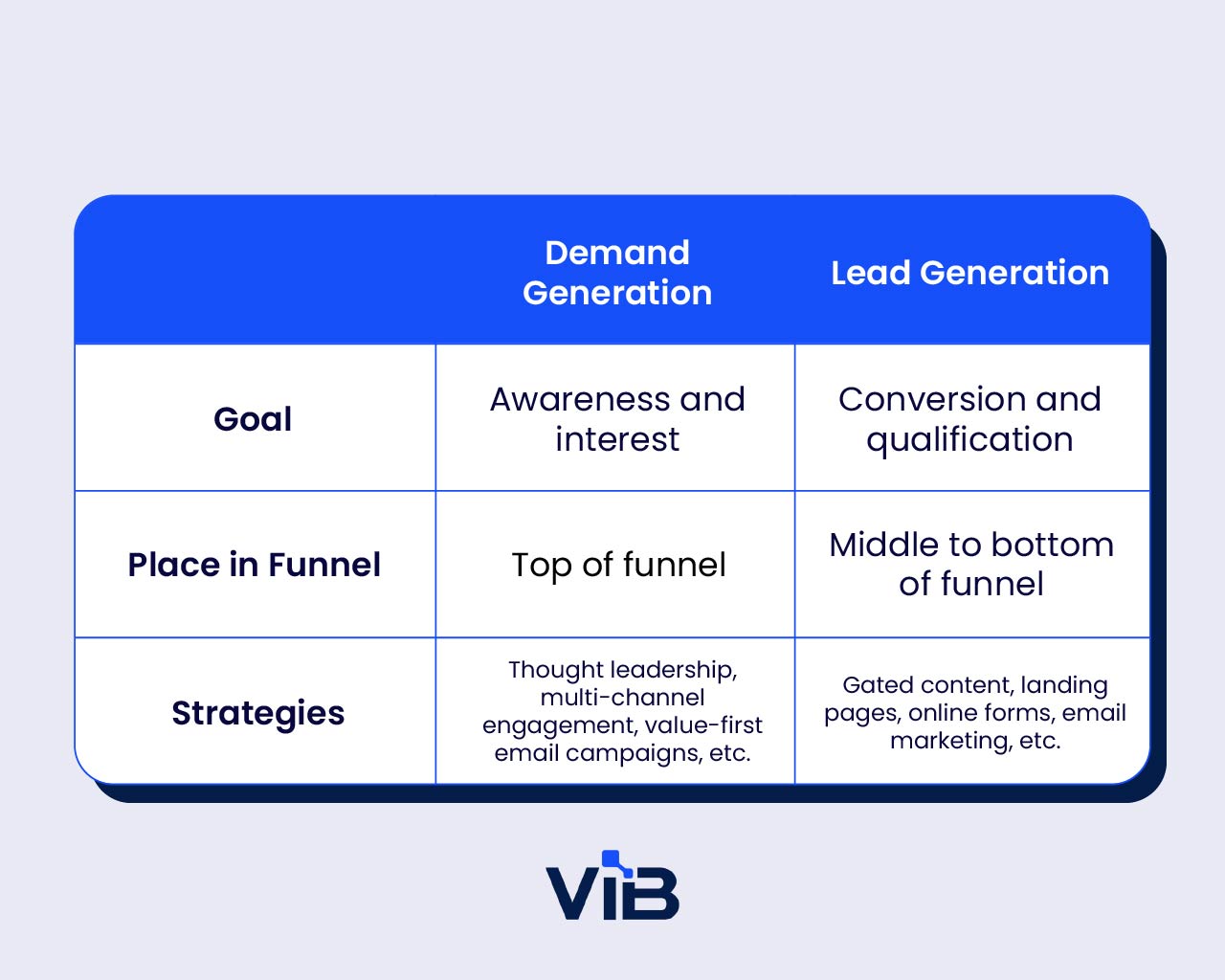
So, it makes sense that each process would involve different strategies and tools. Where lead gen leans on things like gated content, online forms, and email marketing, demand generation focuses on strategies that offer value upfront.
‼️It’s important to note that both processes are critical to a successful marketing strategy. In fact, the transition from demand generation to lead generation should be a smooth, seamless journey down the sales funnel—and there’s a good deal of overlap between the two.
But in this article, we’re focusing specifically on demand generation tools. So, with that in mind, let’s dive into how to find the best ones.
3 key features of the best demand generation tools
There are countless demand generation tools out there—but not all of them have the same capabilities. Here are some features you want in your demand generation tools:
1. Account-based marketing (ABM) capabilities
Account-based marketing (ABM) is a crucial part of B2B marketing these days. In fact, 87% of B2B marketers say their ABM initiatives have a higher ROI vs. other marketing strategies. 💰 And 94% of B2B SaaS marketers say ABM is an “extremely important” or “very important” part of meeting their business objectives.
That’s why the best demand generation tools offer ABM capabilities—allowing you to target specific high-value accounts with personalized messaging. That way, you can engage with the right people at the right time.
2. Multi-channel orchestration
In today’s online world, your prospects are interacting with your brand across a variety of platforms—email, blog posts, webinars, and more. You need tools that can help you create a seamless experience for your prospects no matter where they engage with you. Cross-channel orchestration ensures you’re reaching potential leads where they are—and delivering consistent messaging across platforms.
3. Real-time data and insights
You want to be able to see how your campaigns are performing and make adjustments on the fly. Look for tools that give you detailed analytics, from basic engagement metrics to deeper insights like account-level activity and lead engagement. This data helps you optimize your strategy and drive better results.

How to leverage demand generation tools for high-impact campaigns
Once you’ve got your tools in place, it’s time to put them to work. Here’s how:
1. Segment your audience
Start by using buyer intent data and market research to identify your target audience and segment your leads based on key attributes.

2. Send personalized, high-value content
Use your demand gen tools to send personalized content that speaks to their unique needs.
Leverage content syndication and emails to get your high-value thought leadership in front of the right audience.
3. Track your results to optimize your strategy
To measure the success of your demand gen campaigns, focus on advanced KPIs like:
- Account engagement score: This metric tracks how actively engaged your high-value accounts are with your content and outreach.
- Pipeline acceleration: Measure how quickly leads are moving through the sales funnel, from first touch to closed deal.
- Lead-to-customer conversion rate: This tells you the percentage of leads that ultimately convert into paying customers.
By keeping an eye on these metrics, you can make sure your tools are driving real results. 📈
How ViB can help you meet your demand generation goals
At ViB, we know that demand generation is about more than just getting leads in the door. Our solutions help B2B tech marketers engage, nurture, and convert high-value accounts with ease.
With features like cross-channel orchestration, personalized content delivery, and powerful analytics, ViB provides everything you need to streamline your demand gen efforts and improve your ROI.
Ready to create more meaningful connections with your prospects and drive better business outcomes?


